What Is This Tiny White Stick? The Viral Image Explained (It’s Not What You Think)
Found a tiny white stick in your son’s room? It’s likely a nasal inhaler—not drug paraphernalia. Here’s what it is, how it works, and how to talk to your teen without embarrassment.
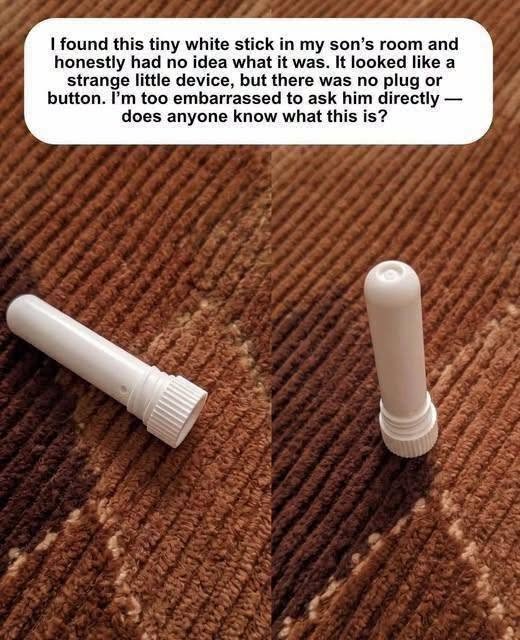
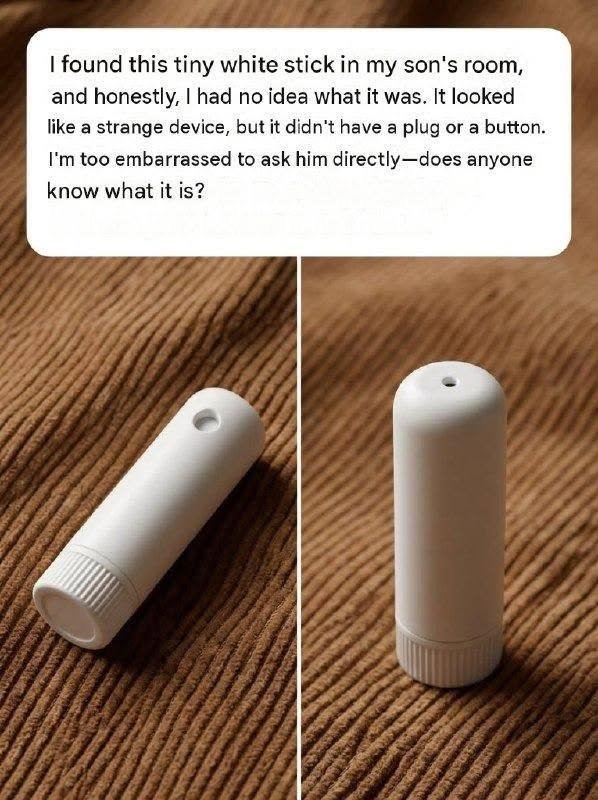
A viral image has been making the rounds on social media: a small white plastic tube, no buttons, no plug, found in a son’s room. The parent is embarrassed and confused, asking the internet, “Does anyone know what this is?”
If you’ve seen this image, you’re not alone. And if you’ve found something similar in your own home, you might be wondering the same thing.
Here’s the truth: it’s almost certainly a nasal inhaler—also known as an aromatherapy inhaler or nose stick. It’s a legal, widely available wellness product used for congestion, allergies, and clear breathing. It is not a vape, a USB drive, or drug paraphernalia.
Let’s break down exactly what this object is, how it works, and why your teen might have one.
What Is the Object? A Nasal Inhaler
The object in the viral photo is a nasal inhaler. It typically looks like this:
A small, cylindrical white plastic tube
A screw-on cap at one end
A ribbed base for grip
No battery, no charging port, no button
Inside: a small absorbent cotton wick
You’ve probably seen similar products at drugstores. The most famous brand is Vicks Inhaler, but there are many generic and refillable versions sold online and in health stores.
These inhalers are designed to deliver a concentrated burst of aromatic vapor directly to your nostrils. They are used for nasal congestion, stuffy noses, allergies, and sometimes for focus or anxiety relief.
How Does a Nasal Inhaler Work?
The mechanism is simple:
You unscrew the cap.
You hold the open tube to one nostril.
You inhale deeply.
The vapors from the essential oils or menthol travel up your nasal passages.
Inside the tube, a cotton wick is soaked with essential oils or medicated ingredients like:
Menthol
Eucalyptus oil
Camphor
Peppermint oil
Lavender or other aromatherapy blends
Some inhalers are pre-filled and disposable. Others are refillable—you add a few drops of your own essential oil blend to the wick.
The effect is cooling, clearing, and often soothing. It’s a popular natural remedy for colds, allergies, and sinus pressure.
Why Would Your Son Have One?
There are many innocent reasons a teenager might have a nasal inhaler:
Allergies or congestion: He may use it to breathe easier during sports, school, or sleep.
Cold or flu season: It’s a common over-the-counter remedy.
Focus and alertness: Some people use peppermint or eucalyptus inhalers to stay awake or concentrate.
Anxiety or stress relief: Aromatherapy inhalers are often used for calming effects.
DIY projects: Refillable inhalers are sold as kits for making custom essential oil blends.
Habit or curiosity: He may have bought it at a drugstore or received it from a friend.
In short: it’s a wellness product, not a sign of something sinister.
Is It Drug Paraphernalia?
No. The design does not match common drug paraphernalia.
Vapes have batteries, charging ports, buttons, or pods.
Snuff bullets are usually metal or hard plastic with a twist mechanism and a small chamber for powder.
Pipes have bowls or stems.
Syringes have needles.
This object has none of those features. It’s a simple plastic tube with a cotton wick. It’s sold openly at pharmacies, supermarkets, and online retailers.
That said, if you have other reasons for concern—changes in behavior, secretiveness, unusual smells, or other items—those are worth addressing separately. But the inhaler itself is not a red flag.
How to Talk to Your Son Without Embarrassment
The viral image plays on a common parenting fear: not knowing what your child is doing. But the best approach is calm curiosity, not accusation.
Here are a few ways to start the conversation:
Be direct but gentle: “I found this in your room. Can you tell me what it is? I’m just curious.”
Avoid jumping to conclusions: Don’t say, “Is this drugs?” That can make him defensive.
Listen first: Let him explain. He might be surprised you don’t know what it is.
Normalize the conversation: “I didn’t know what it was, so I looked it up. It’s a nasal inhaler, right?”
Offer support: If he’s using it for congestion or allergies, ask if he needs a better solution or a doctor’s visit.
The goal is to keep communication open. If you approach him with suspicion, he may shut down. If you approach with curiosity, he’s more likely to be honest.
Safety and Hygiene Notes
Nasal inhalers are generally safe when used as directed, but a few things are worth knowing:
Don’t share inhalers. They go inside the nostril, so sharing can spread germs.
Follow the instructions. Overuse can irritate the nasal passages.
Keep away from young children. Menthol and camphor can be harmful if ingested or used improperly.
Check for allergies. Some essential oils can cause reactions in sensitive people.
Replace the wick or inhaler periodically. Old wicks can harbor bacteria.
If your son is using it frequently for congestion, it might be worth seeing a doctor to rule out chronic allergies or sinus issues.
A Note About Vicks Inhalers and Drug Tests
If the inhaler is a Vicks brand or similar medicated inhaler, it may contain levmetamfetamine, a legal nasal decongestant. In rare cases, this ingredient can cause a false positive on某些 drug tests for amphetamines.
This is not a reason to panic, but it’s good to be aware. If your son is subject to drug testing for sports or other reasons, he should disclose his use of any over-the-counter inhalers.
Key Takeaways
The viral “tiny white stick” is a nasal inhaler, not drug paraphernalia.
It’s used for congestion, allergies, focus, or aromatherapy.
It has no battery, no button, and no plug—so it’s not a vape.
If you find one, talk to your son calmly and curiously.
If you’re concerned about substance use, look at the full picture, not just this object.
Final Thoughts
The internet loves a mystery, and the viral image of the “tiny white stick” has caused unnecessary panic for many parents. But the answer is simple: it’s a nasal inhaler, a harmless and common wellness product.
If you find one in your child’s room, don’t be embarrassed. Use it as an opportunity to have an open, judgment-free conversation. You might learn something new—and your child might appreciate that you asked instead of assumed.
Tags: nasal inhaler, viral image, parenting teens, drug paraphernalia, aromatherapy, Vicks inhaler, teen health, open communication
To provide the best experiences, we use technologies like cookies to store and/or access device information. Consenting to these technologies will allow us to process data such as browsing behavior or unique IDs on this site. Not consenting or withdrawing consent, may adversely affect certain features and functions.
Functional
Always active
The technical storage or access is strictly necessary for the legitimate purpose of enabling the use of a specific service explicitly requested by the subscriber or user, or for the sole purpose of carrying out the transmission of a communication over an electronic communications network.
Preferences
The technical storage or access is necessary for the legitimate purpose of storing preferences that are not requested by the subscriber or user.
Statistics
The technical storage or access that is used exclusively for statistical purposes.The technical storage or access that is used exclusively for anonymous statistical purposes. Without a subpoena, voluntary compliance on the part of your Internet Service Provider, or additional records from a third party, information stored or retrieved for this purpose alone cannot usually be used to identify you.
Marketing
The technical storage or access is required to create user profiles to send advertising, or to track the user on a website or across several websites for similar marketing purposes.