What Is This Small Wooden Object? The Mystery of the Tiny Wood Plug Solved
If you have ever been cleaning out a junk drawer, finishing a DIY project, or assembling flat-pack furniture, you might have stumbled across a tiny object exactly like this. You hold it in your hand, turn it over, and ask yourself: “What on earth is this?”
You are not alone. This little wooden piece is a common mystery for many homeowners and DIY beginners.
The Answer: It’s a Wooden Furniture Plug
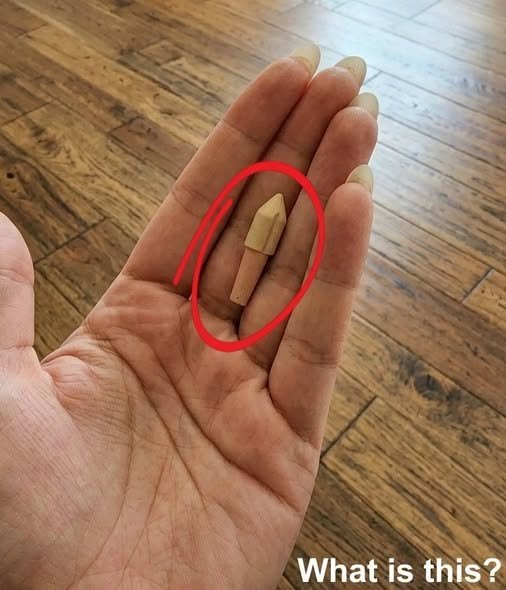
The small, tapered wooden object circled in the photo is known as a wooden furniture plug, a wood screw cover, or a dowel plug.
While it might look like a random scrap of wood or a piece of a toy, it actually serves a very specific and important purpose in woodworking and furniture assembly.
What Is It Used For?
The primary purpose of this little plug is to hide ugly screw holes.
When you build wooden furniture or install cabinetry, you often have to drive screws into the wood to hold pieces together. However, leaving the metal screw head exposed can look unfinished and detract from the natural beauty of the wood.
Here is how this tiny plug solves that problem:
The Assembly: First, the furniture pieces are screwed together.
The Counterbore: A special drill bit creates a small, shallow hole over the top of the screw head.
The Plug: A drop of wood glue is added to the hole, and this tapered wooden plug is tapped in. The pointed end makes it easy to insert snugly.
The Finish: Once the glue dries, the top of the plug is sanded down until it is perfectly flush with the rest of the wood.
The result? A completely seamless, professional-looking piece of furniture where no screws are visible at all.
Other Common Uses
While hiding screws is its main job, these little wooden plugs are incredibly versatile. Crafters and woodworkers also use them for:
Filling accidental drill holes or mistakes in woodworking projects.
Creating decorative patterns by using plugs made from a different type of wood (like walnut plugs in an oak table).
Acting as small pegs in children’s wooden toys or DIY pegboards.
Plugging the ends of wooden dowels to prevent splintering.
Next Time You See One, Don’t Toss It!
If you find a handful of these in a drawer or leftover in a box after building a bookshelf, don’t throw them away. They are incredibly handy to keep around for future repairs, touch-ups, or small DIY projects around the house.
To provide the best experiences, we use technologies like cookies to store and/or access device information. Consenting to these technologies will allow us to process data such as browsing behavior or unique IDs on this site. Not consenting or withdrawing consent, may adversely affect certain features and functions.
Functional
Always active
The technical storage or access is strictly necessary for the legitimate purpose of enabling the use of a specific service explicitly requested by the subscriber or user, or for the sole purpose of carrying out the transmission of a communication over an electronic communications network.
Preferences
The technical storage or access is necessary for the legitimate purpose of storing preferences that are not requested by the subscriber or user.
Statistics
The technical storage or access that is used exclusively for statistical purposes.The technical storage or access that is used exclusively for anonymous statistical purposes. Without a subpoena, voluntary compliance on the part of your Internet Service Provider, or additional records from a third party, information stored or retrieved for this purpose alone cannot usually be used to identify you.
Marketing
The technical storage or access is required to create user profiles to send advertising, or to track the user on a website or across several websites for similar marketing purposes.