How to Easily Clean Your Fridge Using the Cling Film Fridge Trick!
Meta Description: Discover the simple cling film fridge trick that can make refrigerator cleanup easier. Learn how to protect shelves and drawers from spills, crumbs, and sticky messes.
Cleaning the refrigerator is one of those household jobs that is easy to postpone.
Spilled sauces, vegetable crumbs, sticky bottles, and forgotten leftovers can quickly turn shelves and drawers into a messy chore. But a simple organization trick can make future cleanups much easier: using food-safe cling film as a removable protective layer on suitable refrigerator surfaces.
Instead of waiting for every spill to become a stubborn stain, the idea is to create a temporary barrier that can be removed and replaced when it gets dirty.
Here’s how to try it safely.
🧊 What Is the Cling Film Fridge Trick?
The basic idea is simple.
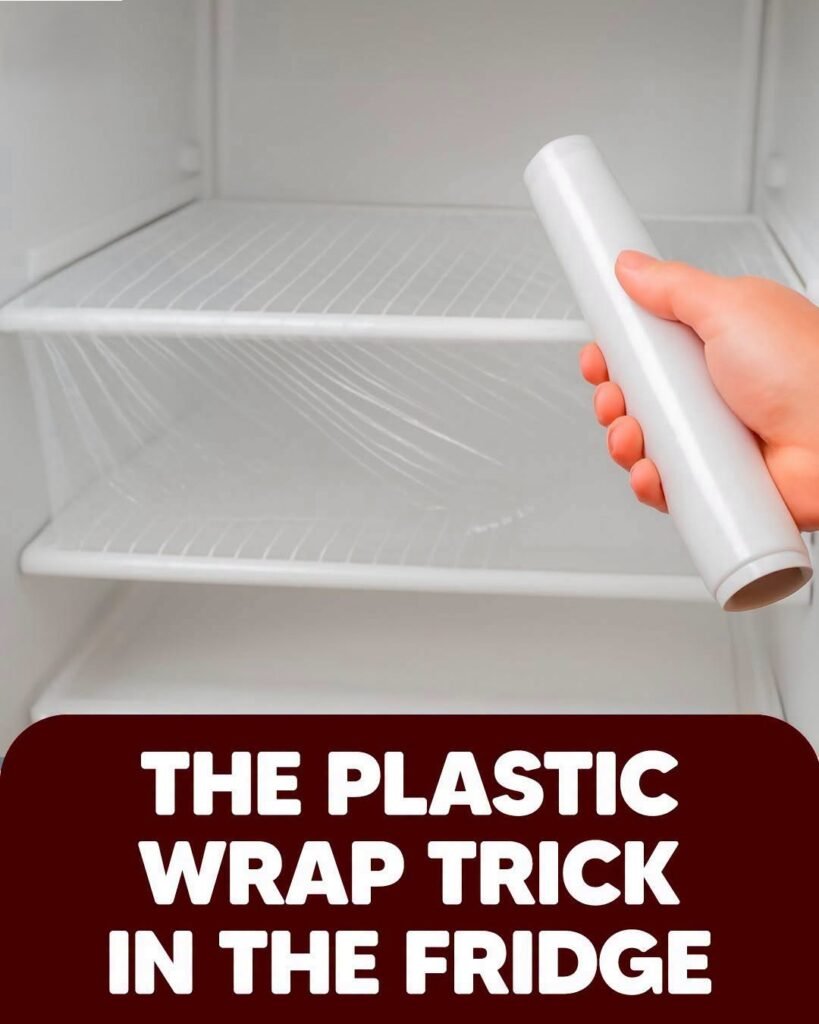
You place a sheet of food-safe cling film over appropriate refrigerator shelves or removable trays.
When crumbs or small spills occur, you can remove the dirty film and replace it instead of having to deep-clean the entire shelf.
It works best as a maintenance trick, not as a replacement for regular refrigerator cleaning.
🧽 What You’ll Need
Food-safe cling film
Mild dish soap
Warm water
Microfiber cloths
Soft sponge
Clean towel
Optional: refrigerator-safe storage containers
Always check your refrigerator manufacturer’s care instructions before covering shelves or using any material inside the appliance.
🛠️ How to Use the Cling Film Fridge Trick
Step 1: Empty the Shelf
Remove food and drinks from the shelf you’re cleaning.
Check expiration dates and discard food that is spoiled or no longer safe to eat.
Keep perishable foods refrigerated while you’re cleaning.
Step 2: Clean the Surface
Wash the shelf with warm water and a small amount of mild dish soap.
Remove any sticky residue, crumbs, or spills.
If the shelf is removable, follow the manufacturer’s instructions for taking it out.
Step 3: Dry Everything Completely
This step is important.
Dry the shelf thoroughly with a clean towel before applying cling film.
Moisture trapped underneath a covering can make cleaning more difficult and may contribute to unpleasant odors.
Step 4: Measure the Cling Film
Cut a piece slightly larger than the area you’re covering.
Smooth it over the surface without creating large folds or loose sections.
Step 5: Keep the Edges Neat
Avoid allowing excess film to hang over the edge of the shelf.
Loose material can interfere with drawers, doors, vents, or other refrigerator components.
Step 6: Replace When Dirty
When the film becomes dirty or has a significant spill, remove it and replace it.
Clean the shelf underneath whenever necessary.
✨ Why Does This Trick Help?
The main benefit is convenience.
A protective layer can catch some crumbs and small spills before they stick directly to the refrigerator shelf.
Instead of spending several minutes scrubbing dried residue, you may be able to remove the dirty covering and clean the area quickly.
It’s particularly useful for shelves where spills happen frequently.
🥛 Where Can You Use It?
The trick may work best on flat, removable refrigerator shelves or trays, provided your refrigerator’s manufacturer allows coverings.
Consider areas where:
Drinks frequently spill
Condiments leak
Small food particles accumulate
Containers occasionally drip
Avoid covering areas where airflow, drainage, temperature sensing, or appliance operation could be affected.
⚠️ Important Refrigerator Safety Tips
Not every refrigerator surface should be covered.
Don’t Block Air Vents
Refrigerators rely on proper airflow to maintain consistent temperatures.
Never cover ventilation openings or airflow channels with cling film.
Keep It Away From Drains
Don’t cover drainage holes or channels.
These areas need to remain open so condensation and water can drain properly.
Don’t Cover Temperature Sensors
Some refrigerators have sensors located inside the compartment.
Avoid covering them unless the manufacturer specifically says it’s safe.
Use Food-Safe Material
Only use cling film that is labeled as suitable for food contact.
Do not use industrial plastic wrap, packaging film, or unknown materials inside your refrigerator.
Don’t Wrap Food Instead of Storing It Safely
Cling film isn’t a substitute for proper food storage.
Perishable foods should be stored appropriately, and leftovers should be refrigerated promptly.
🧼 How to Deep-Clean Your Refrigerator
Even if you use the cling film trick, your refrigerator still needs regular cleaning.
1. Remove Everything
Take out food, containers, drawers, and removable shelves where appropriate.
2. Check for Spoiled Food
Look for expired, leaking, or spoiled items.
3. Wash Removable Parts
Use warm water and mild dish soap unless the manufacturer recommends another method.
4. Wipe Interior Surfaces
Clean walls, shelves, door compartments, and other accessible areas.
5. Clean Spills Immediately
Don’t allow sticky liquids to dry and become harder to remove.
6. Dry Before Reassembling
Make sure surfaces are dry before putting everything back.
🌿 Natural Cleaning Option
For routine cleaning, warm water and mild dish soap are often sufficient.
If you choose another cleaner, make sure it is appropriate for refrigerator interiors and follow the label directions.
Avoid mixing cleaning products.
Never mix bleach with vinegar, ammonia, or other household cleaners.
Some combinations can produce dangerous fumes.
🧊 Other Easy Fridge-Cleaning Habits
The cling film trick is only one way to reduce cleaning time.
Use Leak-Proof Containers
Store leftovers and sauces in containers with secure lids.
Keep Similar Foods Together
Grouping items makes it easier to find spills quickly.
Label Leftovers
Adding dates can help you keep track of when food was stored.
Wipe Spills Immediately
A fresh spill is usually much easier to clean than dried residue.
Don’t Overfill the Refrigerator
Leaving enough space allows air to circulate properly and makes cleaning easier.
❓ Frequently Asked Questions
Can I put cling film on every refrigerator shelf?
No. Use it only where appropriate and where the refrigerator manufacturer allows it. Never cover vents, drains, sensors, or areas necessary for airflow.
Does cling film keep my refrigerator clean?
It can help reduce direct contact between some spills and a protected surface, but it doesn’t eliminate the need for regular cleaning.
Can I reuse dirty cling film?
It’s generally better to replace visibly dirty or contaminated food-contact material rather than repeatedly reusing it.
Can I use plastic wrap over refrigerator vents?
No. Blocking vents can interfere with proper airflow and refrigerator performance.
Is this better than refrigerator shelf liners?
Not necessarily. Reusable refrigerator liners designed for the purpose may be a more practical long-term option, particularly if they are easy to remove and wash.
🏁 Final Thoughts
The cling film fridge trick is a simple idea designed to make everyday refrigerator maintenance easier.
By placing food-safe cling film on suitable flat surfaces, you may be able to catch small crumbs and spills before they become stubborn messes.
But the trick works best when combined with proper refrigerator care.
Keep vents and drains clear, clean spills promptly, use food-safe materials, and follow your appliance manufacturer’s instructions.
A few minutes of preparation today can make your next refrigerator cleanup much quicker. 🧊✨
To provide the best experiences, we use technologies like cookies to store and/or access device information. Consenting to these technologies will allow us to process data such as browsing behavior or unique IDs on this site. Not consenting or withdrawing consent, may adversely affect certain features and functions.
Functional
Always active
The technical storage or access is strictly necessary for the legitimate purpose of enabling the use of a specific service explicitly requested by the subscriber or user, or for the sole purpose of carrying out the transmission of a communication over an electronic communications network.
Preferences
The technical storage or access is necessary for the legitimate purpose of storing preferences that are not requested by the subscriber or user.
Statistics
The technical storage or access that is used exclusively for statistical purposes.The technical storage or access that is used exclusively for anonymous statistical purposes. Without a subpoena, voluntary compliance on the part of your Internet Service Provider, or additional records from a third party, information stored or retrieved for this purpose alone cannot usually be used to identify you.
Marketing
The technical storage or access is required to create user profiles to send advertising, or to track the user on a website or across several websites for similar marketing purposes.