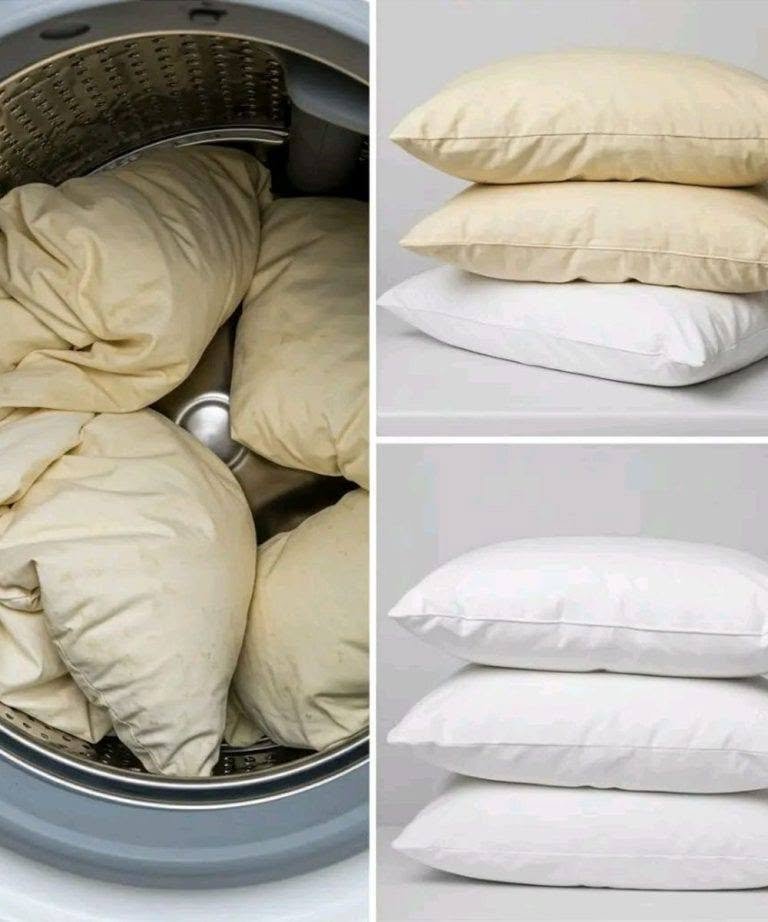
How to Wash Yellowed Pillows: 3 Simple Tips to Help Keep Them White and Fresh
Over time, white pillows can develop yellow stains and lose their fresh appearance. Sweat, natural skin oils, saliva, hair products, and everyday use can gradually discolor both pillowcases and pillows.
The good news is that regular washing and proper care can help reduce yellowing and keep washable pillows looking cleaner and fresher for longer. However, the best cleaning method depends on the pillow’s filling and care label.
Before washing, always check the manufacturer’s care instructions.
Why Do Pillows Turn Yellow?
Yellowing is usually caused by a combination of everyday moisture and oils.
Common causes include:
Sweat
Natural skin oils
Saliva
Hair and skincare products
Moisture buildup
Infrequent washing
Using a pillow protector and regularly washing pillowcases can help reduce direct contact between these substances and the pillow itself.
Tip 1: Check the Care Label Before Washing
Not every pillow should be washed in the same way.
Many polyester and some down or feather pillows can be machine-washed, while certain foam pillows should not be soaked or machine-washed.
Always check the care label first for instructions about:
Machine washing
Water temperature
Recommended detergent
Bleaching restrictions
Drying instructions
If the label says the pillow is not washable, clean only according to the manufacturer’s recommendations.
For Machine-Washable Pillows
Use a gentle cycle and the water temperature recommended on the label.
A mild laundry detergent is usually a good choice. Avoid using more detergent than necessary because excess soap can be difficult to rinse out.
If your washing machine allows it, washing two pillows at once can help keep the load balanced.
Tip 2: Treat Yellow Areas Gently
For washable pillows with visible yellowing, a gentle pre-treatment may help.
Use a laundry stain remover that is suitable for the fabric and follow the product directions carefully.
Test any cleaning product on a small, less visible area when appropriate.
Avoid harsh DIY mixtures or repeatedly applying strong cleaning ingredients. Some products can damage fabrics or leave residue behind.
For stubborn discoloration, remember that older stains may not disappear completely after one wash.
Should You Use Bleach?
Only use bleach if the pillow’s care label specifically permits it.
Some fabrics and fillings can be damaged by bleach, and certain materials may become yellow or weaken over time.
If bleach is not recommended, don’t substitute it with another strong chemical mixture without checking whether it is safe for the material.
Tip 3: Dry Pillows Completely
Proper drying is one of the most important parts of washing a pillow.
A pillow that remains damp inside can develop unpleasant odors and may encourage mold or mildew growth.
Follow the care label for drying instructions.
If Tumble Drying Is Allowed
Use the recommended heat setting and check the pillows periodically.
Dryer balls or clean tennis balls may help some washable pillows maintain their shape, but make sure this method is appropriate for your pillow type.
If Air Drying Is Recommended
Place the pillow in a clean, well-ventilated area and allow it to dry completely before putting it back on the bed.
Don’t cover a damp pillow with a pillowcase or place it back on the bed.
How to Help Keep Pillows White and Fresh
Regular care can help prevent heavy discoloration.
Use a Pillow Protector
A washable zippered pillow protector adds an extra barrier between your pillow and sweat or skin oils.
Wash Pillowcases Regularly
Pillowcases collect oils, sweat, and skincare products, so regular washing helps reduce buildup.
Wash Pillows When Recommended
How often you wash a pillow depends on its material and the manufacturer’s instructions. Follow the care label rather than using one schedule for every pillow.
Allow Pillows to Air Out
Letting bedding air out and keeping it dry can help reduce moisture buildup.
Common Mistakes to Avoid
Washing Without Checking the Label
Foam and other specialty pillows may be damaged by machine washing.
Using Too Much Detergent
Excess detergent can leave residue inside the pillow.
Mixing Cleaning Chemicals
Never mix cleaning products unless the manufacturer specifically says it is safe. Combining certain household chemicals can create dangerous fumes or reactions.
Putting a Damp Pillow Back on the Bed
Make sure the entire pillow is completely dry, including the filling.
Frequently Asked Questions
Can all yellowed pillows be made white again?
Not always. Older stains and discoloration may be permanent, especially if they have built up over a long period.
Regular cleaning can help improve the appearance, but it may not restore every pillow to its original color.
Can I wash memory foam pillows?
Many memory foam pillows should not be machine-washed or soaked. Check the manufacturer’s care instructions. Spot cleaning may be recommended instead.
Why does my pillow smell after washing?
The filling may still contain moisture. Follow the recommended drying instructions and make sure the pillow is completely dry before use.
Final Thoughts
Yellowed pillows are a common result of everyday use. The safest way to keep them looking fresh is simple: check the care label, clean washable pillows using suitable products, and make sure they dry completely.
Using pillow protectors and regularly washing pillowcases can also help reduce the buildup that causes discoloration.
With the right care for your specific pillow, you can help it stay cleaner, fresher, and more comfortable for longer.
To provide the best experiences, we use technologies like cookies to store and/or access device information. Consenting to these technologies will allow us to process data such as browsing behavior or unique IDs on this site. Not consenting or withdrawing consent, may adversely affect certain features and functions.
Functional
Always active
The technical storage or access is strictly necessary for the legitimate purpose of enabling the use of a specific service explicitly requested by the subscriber or user, or for the sole purpose of carrying out the transmission of a communication over an electronic communications network.
Preferences
The technical storage or access is necessary for the legitimate purpose of storing preferences that are not requested by the subscriber or user.
Statistics
The technical storage or access that is used exclusively for statistical purposes.The technical storage or access that is used exclusively for anonymous statistical purposes. Without a subpoena, voluntary compliance on the part of your Internet Service Provider, or additional records from a third party, information stored or retrieved for this purpose alone cannot usually be used to identify you.
Marketing
The technical storage or access is required to create user profiles to send advertising, or to track the user on a website or across several websites for similar marketing purposes.