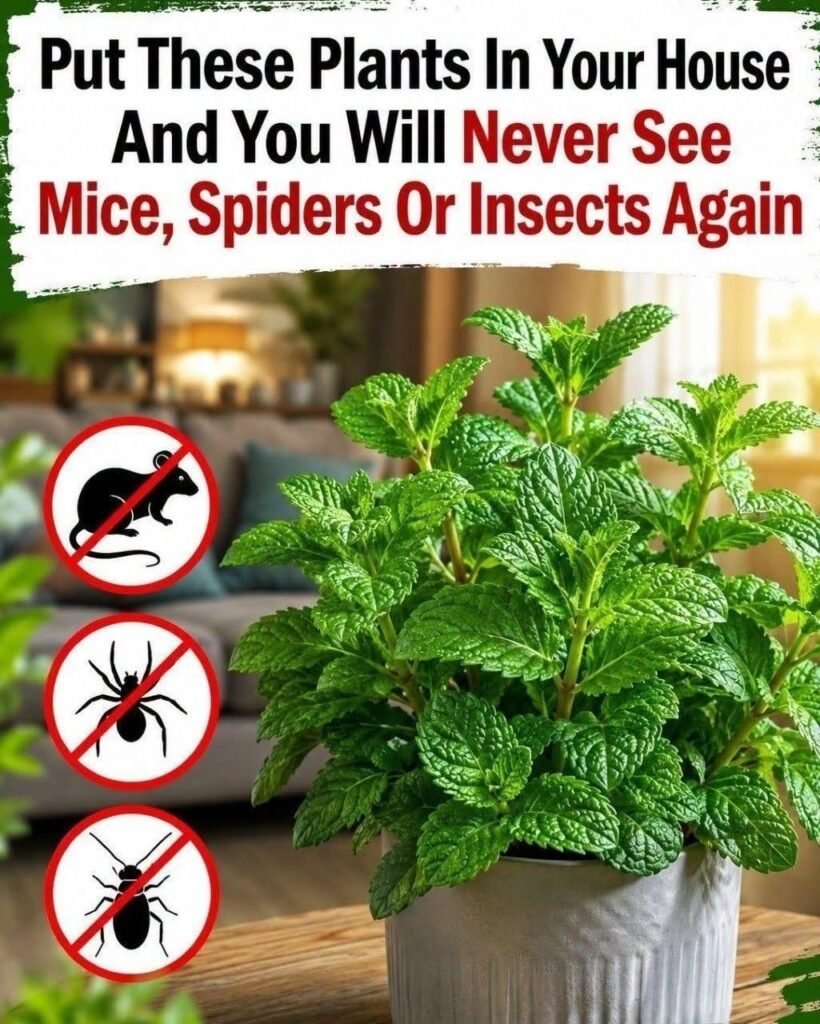
8 Plants That Help Repel Mice, Spiders & Other Insects
Discover 8 powerful plants that naturally repel mice, spiders, ants, and other common pests. Learn the science behind each repellent plant and how to use them effectively in your home and garden.
Dealing with mice, spiders, and insects in your home or garden can feel like a never-ending battle. Chemical repellents and traps work, but they often come with concerns about safety, especially if you have pets or children. Fortunately, nature offers an elegant solution: certain plants emit scents and compounds that these pests find deeply unpleasant, driving them away without any toxic chemicals.
These pest-repelling plants don’t just protect your space—they also add beauty, fragrance, and even culinary value to your home. From the refreshing zing of peppermint to the sunny allure of marigolds, here are eight plants that can help you create a natural pest barrier.
1. Peppermint (Mentha piperita)
Peppermint is perhaps the most versatile pest-repelling plant you can grow. Its intense menthol aroma is beloved by humans but hated by mice, spiders, ants, and even mosquitoes. The strong scent overwhelms a mouse’s sense of smell, which they rely on heavily for navigation, effectively confusing them and deterring them from entering treated areas. Spiders, which also use scent to detect prey and threats, are similarly repelled.
This aromatic herb is excellent for repelling mice, spiders, ants, mosquitoes, and houseflies specifically. For best results, grow peppermint in containers near doorways, windows, or along garden beds, as it can become invasive if planted directly in the ground. You can also create a DIY repellent spray by steeping fresh peppermint leaves in water or by diluting a few drops of peppermint essential oil in a spray bottle.
2. Lavender (Lavandula angustifolia)
Lavender is celebrated for its calming fragrance, but pests find it anything but relaxing. The plant’s essential oils, particularly linalool and linalyl acetate, repel moths, fleas, flies, mosquitoes, and spiders. Lavender’s scent can also mask the pheromones that mice use to communicate, disrupting their ability to navigate and making treated areas less appealing.
Lavender thrives in sunny, dry conditions and grows well in containers, making it an ideal windowsill or patio plant. Dried lavender bouquets serve a dual purpose: they look charming and continue to repel insects long after the blooms have faded. Place potted lavender near entryways or in rooms where spiders tend to appear.
3. Rosemary (Rosmarinus officinalis)
Rosemary is a culinary staple with a hidden talent for pest control. Its piney, resinous aroma is pleasant to humans but intensely overpowering to insects. Rosemary is effective against spiders, mosquitoes, moths, ants, and even scorpions. The plant emits volatile organic compounds that have demonstrated significant repellent effects on various pests.
Plant rosemary in containers near doors and windows to create a fragrant barrier. You can also place dried sprigs in clothes drawers to repel moths and silverfish, or burn a few leaves to release the repellent aroma throughout a room. Since rosemary is a hardy perennial in many climates, it provides year-round protection with minimal maintenance.
4. Chrysanthemums (Chrysanthemum spp.)
Chrysanthemums, or “mums,” are more than just a pretty autumn flower. They contain a natural compound called pyrethrum, which is a potent insecticide that affects the nervous systems of many pests. These flowers are known to repel roaches, ants, ticks, silverfish, lice, fleas, and bedbugs. Pyrethrum has been used as a natural insecticide for centuries and remains one of the most effective plant-based pest deterrents available.
Plant chrysanthemums in flower beds near your home’s foundation, or grow them in pots on patios and balconies. They thrive in full sun and well-drained soil. While they are most effective outdoors, their pest-repelling properties can benefit any area where they are placed.
5. Marigolds (Tagetes spp.)
Marigolds are a garden favorite for their vibrant orange and yellow blooms, but their pest-repelling powers are equally impressive. The pungent odor emitted by their leaves and stems is deeply unpleasant to mice, mosquitoes, aphids, and other insects. Marigolds are frequently used as companion plants in vegetable gardens to protect crops from pests like the eggplant fruit borer and aphids.
Scatter marigolds liberally around garden borders, between vegetable rows, or in pots near entryways. They are easy to grow from seed and thrive in full sun. As an added bonus, marigolds attract beneficial insects like ladybugs and lacewings, further enhancing your garden’s natural pest control.
6. Catnip (Nepeta cataria)
While catnip is famous for its euphoric effect on feline friends, it has a very different impact on pests. The compound nepetalactone, found in catnip’s essential oil, is a powerful natural repellent against mosquitoes, cockroaches, and rodents. Studies have shown that nepetalactone activates an irritant receptor in mosquitoes, driving them away from treated areas.
Catnip is also effective at deterring mice. Its unique chemical composition has been proven to repel rodents, making it a valuable addition to any pest-management garden plan. Plant catnip strategically around your yard, or use dried catnip in sachets placed in areas where mice have been spotted. Note that catnip can be invasive, so container growing is often recommended.
7. Basil (Ocimum basilicum)
Basil is a kitchen essential, but it also serves as an effective natural repellent for flies, mosquitoes, and spiders. The fragrant, peppery scent of basil is thought to be what keeps insects away, and it works best when placed around the entry points of your home.
Grow basil in pots on windowsills, near doorways, or on outdoor patios. Beyond its pest-repelling benefits, basil is a rewarding herb to grow and harvest for cooking. For an extra layer of protection, you can create a simple basil spray by soaking fresh leaves in water and using the infusion to wipe down surfaces where spiders tend to gather.
8. Lemongrass / Citronella (Cymbopogon citratus)
Lemongrass, also known as citronella, is one of the most well-known natural mosquito repellents. Its essential oil contains citronellal, citronellol, and geraniol—compounds that are highly effective at repelling mosquitoes, spiders, ants, and scorpions. A study published in the New England Journal of Medicine found that repellents containing up to 10% citronella oil were effective at reducing mosquito bites.
Lemongrass is a tropical plant that thrives in full sun and warm conditions. It grows well in containers, making it suitable for patios and balconies. Place pots of lemongrass near seating areas to create a mosquito-free zone, or rub crushed leaves directly on your skin for a natural, short-term repellent.
Summary Table
Plant
Scientific Name
Repels
Peppermint
Mentha piperita
Mice, spiders, ants, mosquitoes
Lavender
Lavandula angustifolia
Moths, fleas, flies, mosquitoes, spiders
Rosemary
Rosmarinus officinalis
Spiders, mosquitoes, moths, ants
Chrysanthemums
Chrysanthemum spp.
Roaches, ants, ticks, fleas, bedbugs
Marigolds
Tagetes spp.
Mice, mosquitoes, aphids, insects
Catnip
Nepeta cataria
Mosquitoes, cockroaches, rodents
Basil
Ocimum basilicum
Flies, mosquitoes, spiders
Lemongrass
Cymbopogon citratus
Mosquitoes, spiders, ants, scorpions
Practical Tips for Using Pest-Repelling Plants
Placement matters. Position repellent plants near entry points—doorways, windows, and cracks in your home’s foundation—to intercept pests before they enter.
Use containers strategically. Many of these plants, especially mints and lemongrass, spread aggressively. Container growing keeps them contained and allows you to move them where they’re needed most.
Combine approaches. For severe infestations, natural repellents work best as part of a broader pest-management strategy. Plants can deter pests, but they may not eliminate an established population entirely.
Refresh regularly. If using dried herbs or DIY sprays, replenish them frequently to maintain their potency. Essential oils evaporate over time, reducing effectiveness.
Harvest and use. Many of these plants serve double duty in the kitchen. Rosemary, basil, peppermint, and lemongrass can all be harvested for culinary use while continuing to protect your home.
Final Thoughts
Nature provides an elegant, safe, and effective arsenal against common household pests. By strategically incorporating these eight plants into your home and garden, you can reduce your reliance on chemical repellents while enjoying fresher air, beautiful greenery, and the satisfaction of a naturally pest-free space.
Whether you’re battling mice in the pantry, spiders in the corners, or mosquitoes on the patio, there’s a plant on this list that can help. Start with a few pots of peppermint and lavender, and expand your natural pest barrier from there. Your home—and your health—will thank you.
To provide the best experiences, we use technologies like cookies to store and/or access device information. Consenting to these technologies will allow us to process data such as browsing behavior or unique IDs on this site. Not consenting or withdrawing consent, may adversely affect certain features and functions.
Functional
Always active
The technical storage or access is strictly necessary for the legitimate purpose of enabling the use of a specific service explicitly requested by the subscriber or user, or for the sole purpose of carrying out the transmission of a communication over an electronic communications network.
Preferences
The technical storage or access is necessary for the legitimate purpose of storing preferences that are not requested by the subscriber or user.
Statistics
The technical storage or access that is used exclusively for statistical purposes.The technical storage or access that is used exclusively for anonymous statistical purposes. Without a subpoena, voluntary compliance on the part of your Internet Service Provider, or additional records from a third party, information stored or retrieved for this purpose alone cannot usually be used to identify you.
Marketing
The technical storage or access is required to create user profiles to send advertising, or to track the user on a website or across several websites for similar marketing purposes.