How to Deal With Tartar Buildup: What You Can Safely Do at Home
Meta Description: Learn the difference between plaque and tartar, why hardened tartar cannot simply be brushed away, and the safest ways to protect your teeth at home.
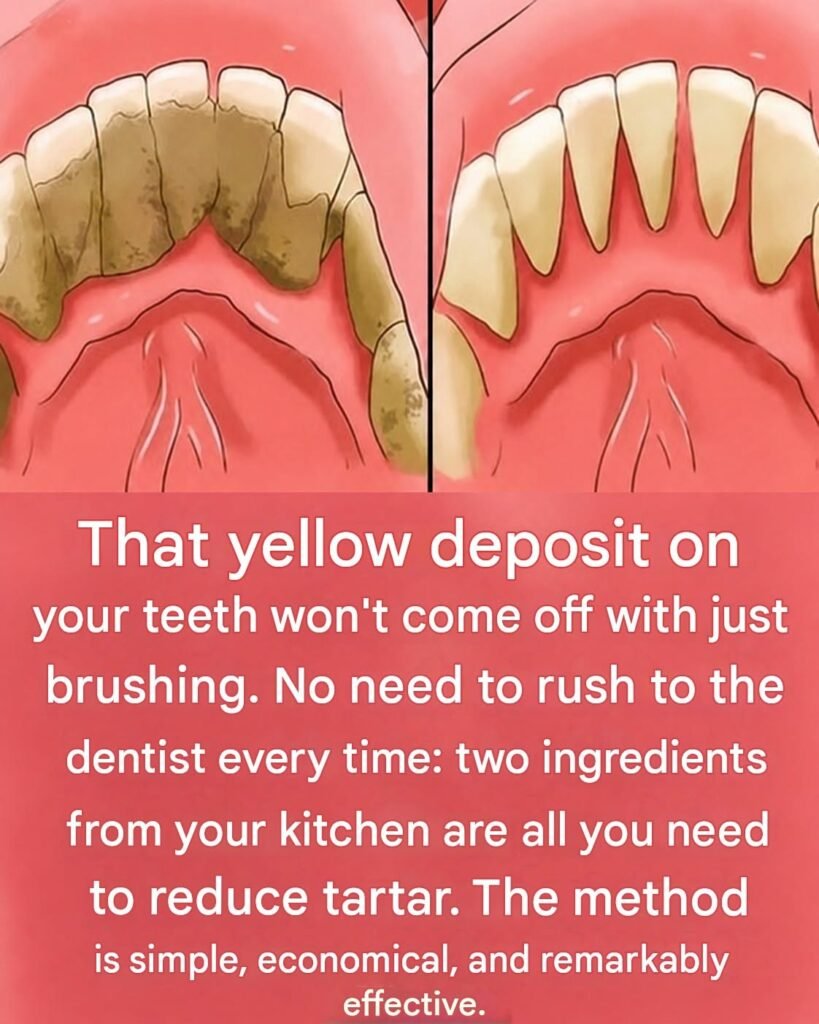
Seeing a yellow or brown buildup around your teeth can be concerning. You may have seen viral posts claiming that two simple kitchen ingredients can remove tartar quickly at home.
But there is an important distinction: plaque can often be controlled with good oral hygiene, while hardened tartar (calculus) generally cannot be safely removed with household ingredients.
Trying aggressive DIY methods may actually damage your teeth or gums.
What Is Tartar?
Plaque is a sticky film of bacteria that forms naturally on teeth.
When plaque isn’t removed regularly, minerals in saliva can cause it to harden into tartar, also called dental calculus.
Unlike soft plaque, hardened tartar is firmly attached to the tooth surface.
Why Does Tartar Look Yellow?
Tartar can appear:
Yellow
Cream-colored
Brown
Darker around the gumline
Its appearance can vary depending on oral hygiene, diet, smoking, and other factors.
Can You Remove Tartar With Kitchen Ingredients?
It’s not recommended.
Popular DIY suggestions may involve baking soda, vinegar, lemon juice, salt, or other abrasive or acidic ingredients.
These methods aren’t a safe substitute for professional dental cleaning.
Why Lemon or Vinegar Can Be a Problem
Acidic substances can contribute to enamel erosion when teeth are repeatedly exposed to them.
What About Baking Soda?
Baking soda can be included in some properly formulated dental products, but rubbing concentrated household baking soda directly onto teeth isn’t the same as using a professionally formulated toothpaste.
Excessive or aggressive scrubbing can irritate gums and contribute to tooth wear.
What You Can Safely Do at Home
1. Brush Twice a Day
Use a fluoride toothpaste and brush gently for about two minutes.
Pay particular attention to the gumline, where plaque commonly accumulates.
2. Clean Between Your Teeth
Floss or use another dentist-recommended interdental cleaning method once a day.
A toothbrush cannot effectively clean every space between teeth.
3. Don’t Try to Scrape Tartar Yourself
Using sharp objects or homemade tools to chip away tartar can injure your gums or damage the tooth surface.
Professional dental instruments are designed for this purpose.
When Do You Need a Dentist?
If hardened deposits remain after careful brushing and flossing, a dental professional can assess them and perform a professional cleaning when appropriate.
You should also seek dental advice if you have:
Bleeding or swollen gums
Persistent bad breath
Tooth sensitivity
Tooth pain
Loose teeth
Receding gums
Significant buildup around the gumline
How to Prevent Tartar From Building Up
Prevention is much easier than trying to remove hardened deposits later.
A good routine includes:
Brushing twice daily with fluoride toothpaste
Cleaning between teeth daily
Regular dental checkups
Limiting frequent sugary snacks and drinks
Avoiding tobacco
Replacing your toothbrush when it becomes worn
Frequently Asked Questions
Can brushing remove existing tartar?
Brushing can help remove plaque and prevent additional buildup, but hardened tartar usually requires professional removal.
Is baking soda safe for teeth?
Small amounts may be found in formulated oral-care products, but using abrasive homemade mixtures excessively can damage enamel or irritate gums.
Can vinegar dissolve tartar?
Vinegar is acidic and should not be used as a DIY tartar-removal treatment because repeated acid exposure can damage tooth enamel.
How can I make my teeth look cleaner at home?
Consistent brushing with fluoride toothpaste, daily interdental cleaning, and professional dental care are safer approaches than aggressive homemade treatments.
Final Thoughts
There is no reliable two-ingredient kitchen recipe that safely replaces professional tartar removal.
The best approach is simple: control plaque with good daily oral hygiene, avoid harsh DIY treatments, and let a dental professional remove hardened tartar when necessary.
A healthy smile doesn’t require a viral “miracle” hack—it requires consistent, gentle care. 🦷✨
To provide the best experiences, we use technologies like cookies to store and/or access device information. Consenting to these technologies will allow us to process data such as browsing behavior or unique IDs on this site. Not consenting or withdrawing consent, may adversely affect certain features and functions.
Functional
Always active
The technical storage or access is strictly necessary for the legitimate purpose of enabling the use of a specific service explicitly requested by the subscriber or user, or for the sole purpose of carrying out the transmission of a communication over an electronic communications network.
Preferences
The technical storage or access is necessary for the legitimate purpose of storing preferences that are not requested by the subscriber or user.
Statistics
The technical storage or access that is used exclusively for statistical purposes.The technical storage or access that is used exclusively for anonymous statistical purposes. Without a subpoena, voluntary compliance on the part of your Internet Service Provider, or additional records from a third party, information stored or retrieved for this purpose alone cannot usually be used to identify you.
Marketing
The technical storage or access is required to create user profiles to send advertising, or to track the user on a website or across several websites for similar marketing purposes.