Baking Soda for Dark Spots, Wrinkles, and Dark Circles: DIY Recipes & Safety Guide
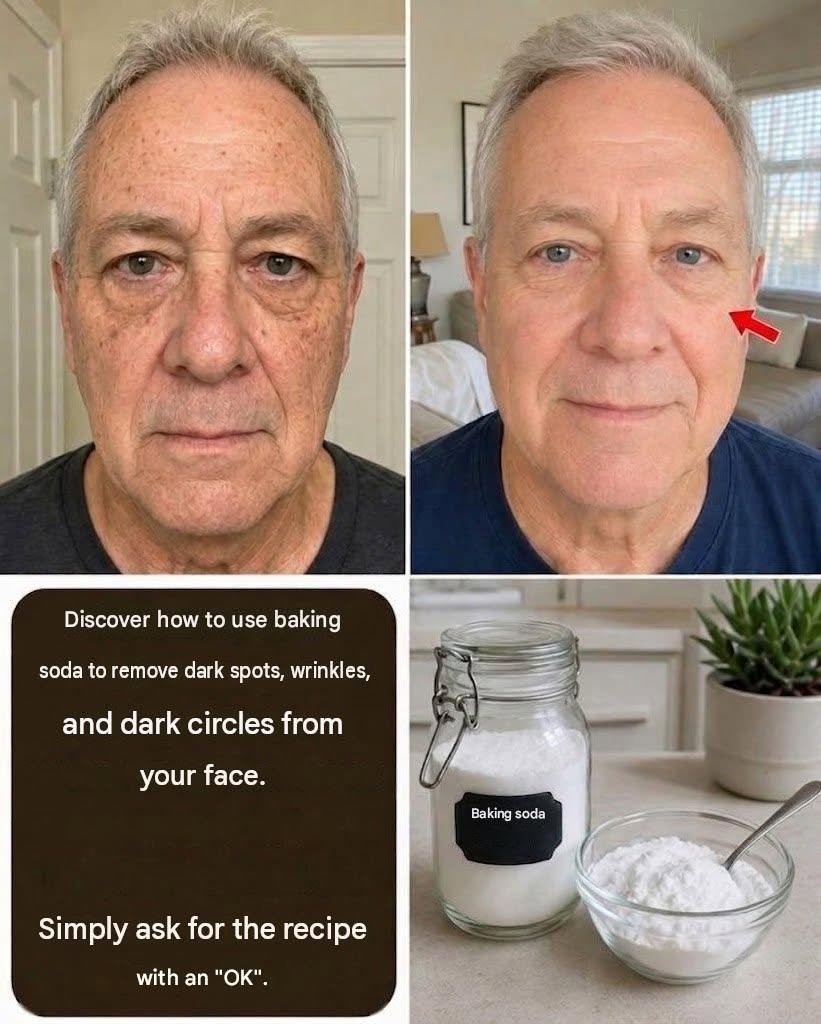
Baking soda has become a popular kitchen staple in DIY skincare routines, with many claiming it can help fade dark spots, smooth wrinkles, and brighten under-eye circles. But does it really work? And is it safe?
Here’s everything you need to know about using baking soda on your face—including recipes, expert warnings, and safer alternatives.
How Baking Soda Works on Skin
Baking soda (sodium bicarbonate) is a fine, crystalline powder that acts as a mechanical exfoliant. When mixed into a paste and gently massaged onto the skin, it helps remove dead skin cells from the surface, which can temporarily make skin feel smoother and look brighter.
However, it’s important to understand that baking soda is highly alkaline with a pH of about 9, while healthy skin is naturally acidic with a pH between 4.5 and 5.5. This means baking soda can disrupt your skin’s protective acid mantle, leading to irritation, dryness, and sensitivity.
Recipe 1: For Dark Spots & Hyperpigmentation
Dark spots are caused by melanin in the deeper layers of the skin, and baking soda cannot reach that far. However, its exfoliating properties may help fade surface-level discoloration over time.
Baking Soda + Honey + Lemon Mask
Ingredients:
1 teaspoon pure honey
½ teaspoon baking soda (very fine powder)
Juice of ½ fresh lemon
Instructions:
Mix all ingredients in a small bowl until you form a smooth paste.
Apply to clean, damp skin, focusing on areas with dark spots.
Leave on for 3–5 minutes only—baking soda can be potent.
Rinse thoroughly with lukewarm water and pat dry.
Follow with a moisturizer.
⚠️ Caution: Lemon juice can make your skin sensitive to sunlight. Use this mask only in the evening and apply sunscreen the next day.
Recipe 2: For Wrinkles & Fine Lines
Baking soda can temporarily make skin feel smoother by lightly exfoliating dry, rough areas, which may make fine lines look less visible. However, experts warn that its high alkalinity disrupts the skin barrier and makes it a poor choice for treating wrinkles long-term.
Baking Soda + Coconut Oil Scrub
Ingredients:
1 tablespoon baking soda
Coconut oil (enough to make a paste)
½ tablespoon honey
Few drops of your favorite essential oil (optional)
Instructions:
Combine all ingredients in a bowl to create a fine paste—not too thin or too thick.
Cleanse your face with warm water.
Gently massage the paste onto your face in circular motions for no more than 5 minutes.
Remove with a washcloth and rinse with tap water.
Your skin may look slightly red initially but should normalize within 5–10 minutes.
Use once or twice a week for best results.
💡 Tip: You can use ice cubes made from rose water to cool and balance your skin’s pH after using this alkaline DIY.
Recipe 3: For Dark Circles
The skin around the eyes is the thinnest on the face—almost 40% thinner than other areas—making it especially delicate and prone to dehydration.
Baking Soda + Cold Milk Paste
Ingredients:
1 teaspoon baking soda
Cold milk or cold water
Instructions:
Mix the baking soda with enough cold milk or water to form a smooth paste.
Apply gently underneath your eye area only—avoid getting it into your eyes.
Let it rest for 15–20 minutes.
Gently remove with a wet washcloth or rinse with cold water.
Follow with an under-eye cream or serum to maintain moisture.
⚠️ Warning: Many dermatologists warn against using baking soda near the eyes. The crystals are irregularly shaped and can create microscopic tears in the delicate skin, triggering inflammation. Some experts have also seen baking soda cause darker discoloration, especially in people with medium or deeper skin tones.
⚠️ Important Safety Precautions
Before trying any baking soda skincare remedy, keep these expert warnings in mind:
Always do a patch test on a small area of skin before applying to your face.
Never leave baking soda on your skin for more than a few minutes—over-exfoliating can cause redness, breakouts, burning, and dry skin.
Don’t use it daily. Exfoliating day and night isn’t recommended. Once or twice a week is plenty.
Baking soda may actually make dark spots worse. Dermatologist Dr. Hannah Kopelman warns: “I have actually seen it cause darker discoloration, especially in people with medium or deeper skin tones”.
It doesn’t truly erase wrinkles. Baking soda only offers temporary surface smoothing—it doesn’t stop ageing or erase wrinkles.
Avoid if you have sensitive or dry skin. Baking soda strips away natural oils, which can lead to chronic dryness and irritation.
The Verdict: Should You Use Baking Soda on Your Face?
Baking soda can provide temporary, surface-level improvements through gentle exfoliation. However, dermatologists emphasize that there is scant evidence supporting its use for skin, and it may do more harm than good.
If you decide to try these DIY recipes, use them sparingly and with extreme caution. For lasting results with dark spots, wrinkles, and dark circles, dermatologists recommend scientifically proven ingredients like salicylic acid, glycolic acid, niacinamide, retinol, and vitamin C.
Disclaimer: This article is for informational purposes only and does not constitute medical or professional skincare advice. Skin reacts differently to products; always perform a patch test before use and consult a dermatologist for specific concerns or conditions.
To provide the best experiences, we use technologies like cookies to store and/or access device information. Consenting to these technologies will allow us to process data such as browsing behavior or unique IDs on this site. Not consenting or withdrawing consent, may adversely affect certain features and functions.
Functional
Always active
The technical storage or access is strictly necessary for the legitimate purpose of enabling the use of a specific service explicitly requested by the subscriber or user, or for the sole purpose of carrying out the transmission of a communication over an electronic communications network.
Preferences
The technical storage or access is necessary for the legitimate purpose of storing preferences that are not requested by the subscriber or user.
Statistics
The technical storage or access that is used exclusively for statistical purposes.The technical storage or access that is used exclusively for anonymous statistical purposes. Without a subpoena, voluntary compliance on the part of your Internet Service Provider, or additional records from a third party, information stored or retrieved for this purpose alone cannot usually be used to identify you.
Marketing
The technical storage or access is required to create user profiles to send advertising, or to track the user on a website or across several websites for similar marketing purposes.