10 Early Warning Signs of a Stroke Everyone Should Know to Take Prompt Action
When it comes to a stroke, time is brain. Every minute that passes without treatment, roughly 1.9 million brain cells die. Stroke is a leading cause of death and long-term disability worldwide, but the vast majority of severe outcomes can be prevented if the warning signs are recognized and treated immediately.
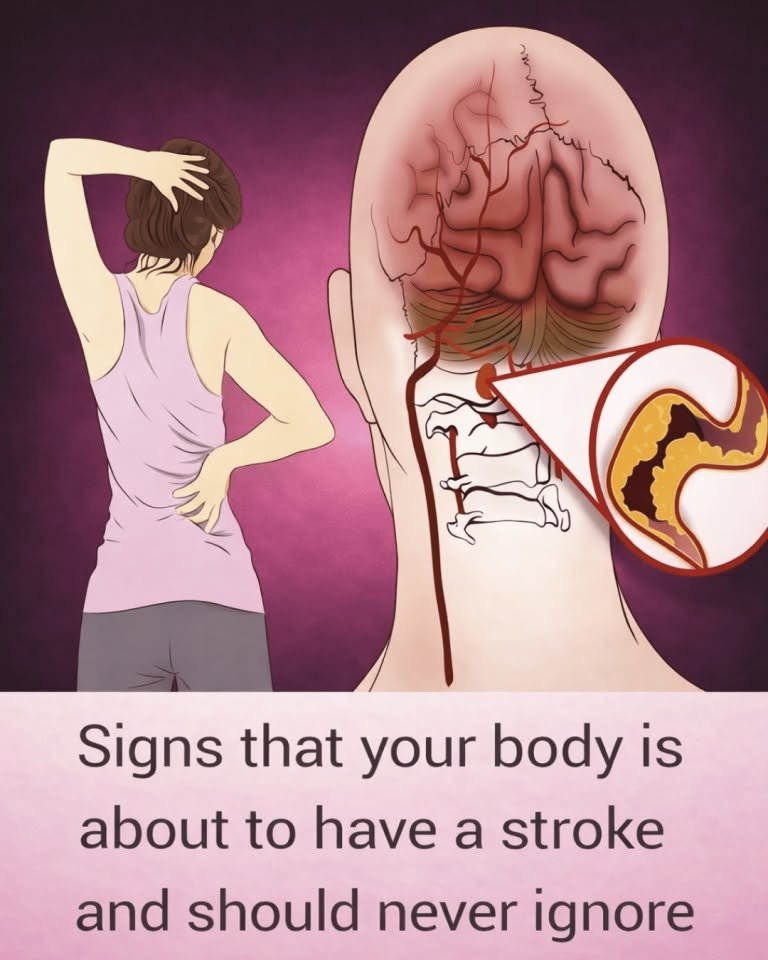
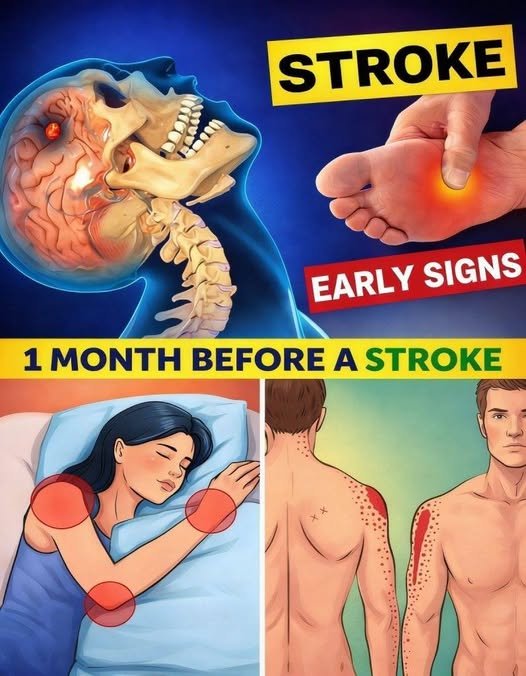
As illustrated in the image above—which depicts neck pain and a narrowed carotid artery—strokes don’t always announce themselves with a dramatic collapse. Often, the body sends subtle, fleeting warning signs in the hours, days, or even weeks before a major event. Knowing these 10 early warning signs could save your life or the life of someone you love.
The FAST Acronym: Your First Line of Defense
Before diving into the lesser-known symptoms, every adult should memorize the FAST acronym, developed by the American Stroke Association:
F — Face Drooping: Does one side of the face droop or is it numb? Ask the person to smile. Is the smile uneven?
A — Arm Weakness: Is one arm weak or numb? Ask the person to raise both arms. Does one arm drift downward?
S — Speech Difficulty: Is speech slurred, or are they unable to speak or hard to understand? Ask the person to repeat a simple sentence.
T — Time to Call 911: If someone shows any of these symptoms, even if the symptoms go away, call 911 and get them to a hospital immediately. Note the time when the first symptoms appeared.
While FAST covers the most common signs, there are other critical warnings that are often overlooked. Here are 10 early signs you should never ignore.
1. Sudden Numbness or Weakness (Often on One Side)
This is one of the most common and recognizable signs. You might suddenly feel weakness in your face, arm, or leg—particularly on one side of the body. It can feel like a heavy blanket has been draped over one limb, or like the limb has simply “fallen asleep” and won’t wake up. If you can’t hold a cup or lift an arm, seek emergency care immediately.
2. Sudden Confusion or Trouble Understanding
A stroke can disrupt the brain’s language centers. You might suddenly feel disoriented, have trouble following a conversation, or find yourself unable to make sense of what others are saying. This confusion can come on abruptly, even if you were perfectly lucid moments before.
3. Trouble Speaking or Slurred Speech
This is closely related to confusion but is a distinct warning sign. You may try to speak, but the words come out slurred, garbled, or jumbled. You might know exactly what you want to say, but your mouth won’t cooperate. This is a major red flag for a stroke affecting the brain’s language or motor control centers.
4. Sudden Vision Problems
A stroke can affect the nerves that control your eyes. You might experience sudden blurred vision, double vision, or a loss of vision in one or both eyes. Sometimes, it feels like a curtain has been pulled down over one eye. Any sudden change in vision warrants immediate medical attention.
5. Severe, Unexplained Headache
A sudden, severe headache—often described as a “thunderclap” headache—can be a sign of a hemorrhagic stroke (bleeding in the brain). This type of headache comes on instantly and is often accompanied by vomiting, dizziness, or confusion. If you experience a headache that feels like the worst of your life, call emergency services.
6. Dizziness or Loss of Balance
If you suddenly feel dizzy, unsteady on your feet, or have trouble walking, it could be a sign of a stroke affecting the cerebellum or brainstem. This is often accompanied by a sudden loss of coordination or a feeling that the room is spinning. If you can’t walk in a straight line or suddenly feel like you’re going to fall, don’t brush it off.
7. Sudden Neck Pain or Stiffness
As depicted in the image, severe neck pain can be an early warning sign of a stroke, specifically one caused by a carotid artery dissection. This occurs when the inner lining of the carotid artery (the main artery in the neck supplying blood to the brain) tears. It is a common cause of stroke in younger adults. If you experience sudden, severe neck pain, especially accompanied by a headache or vision changes, seek immediate medical help.
8. Difficulty Swallowing
Dysphagia, or difficulty swallowing, is a common but often overlooked symptom. You might suddenly choke on food or liquids, or feel like something is stuck in your throat. This occurs when the stroke affects the nerves that control the swallowing reflex.
9. Sudden Nausea or Vomiting
While nausea and vomiting can be caused by many things, when they occur suddenly alongside other symptoms like dizziness, headache, or confusion, they can be a sign of a stroke, particularly one affecting the posterior circulation of the brain. Women are more likely to experience these “atypical” symptoms.
10. Transient Ischemic Attack (TIA) or “Mini-Stroke”
A TIA is a temporary blockage of blood flow to the brain. It causes the same symptoms as a stroke—drooping face, weakness, slurred speech—but they typically resolve within minutes to an hour. A TIA is a major warning sign. It means a full-blown stroke could happen soon. According to the American Stroke Association, more than a third of people who have a TIA and don’t get treatment have a major stroke within a year.
What to Do If You Spot These Signs
If you or someone you know experiences any of these symptoms, do not wait to see if they go away.
Call 911 or your local emergency number immediately. Do not drive yourself to the hospital.
Note the time when the first symptoms appeared. This is critical because clot-busting drugs (like tPA) are most effective when given within 3 to 4.5 hours of the first symptom.
Do not give the person aspirin unless instructed by a medical professional, as it could worsen a bleeding stroke.
Stay calm and keep the person comfortable until emergency responders arrive.
The Bottom Line
Strokes are medical emergencies. While the risk of stroke increases with age, they can happen to anyone at any time. Understanding these 10 early warning signs—from sudden weakness and confusion to neck pain and dizziness—empowers you to act quickly.
Remember: Time is brain. The faster you recognize the signs and get medical help, the better the chances of survival and a full recovery.
Disclaimer: This article is for informational purposes only and is not a substitute for professional medical advice, diagnosis, or treatment. Always seek the advice of your physician or other qualified health provider with any questions you may have regarding a medical condition. If you suspect a medical emergency, call your local emergency services immediately.
To provide the best experiences, we use technologies like cookies to store and/or access device information. Consenting to these technologies will allow us to process data such as browsing behavior or unique IDs on this site. Not consenting or withdrawing consent, may adversely affect certain features and functions.
Functional
Always active
The technical storage or access is strictly necessary for the legitimate purpose of enabling the use of a specific service explicitly requested by the subscriber or user, or for the sole purpose of carrying out the transmission of a communication over an electronic communications network.
Preferences
The technical storage or access is necessary for the legitimate purpose of storing preferences that are not requested by the subscriber or user.
Statistics
The technical storage or access that is used exclusively for statistical purposes.The technical storage or access that is used exclusively for anonymous statistical purposes. Without a subpoena, voluntary compliance on the part of your Internet Service Provider, or additional records from a third party, information stored or retrieved for this purpose alone cannot usually be used to identify you.
Marketing
The technical storage or access is required to create user profiles to send advertising, or to track the user on a website or across several websites for similar marketing purposes.