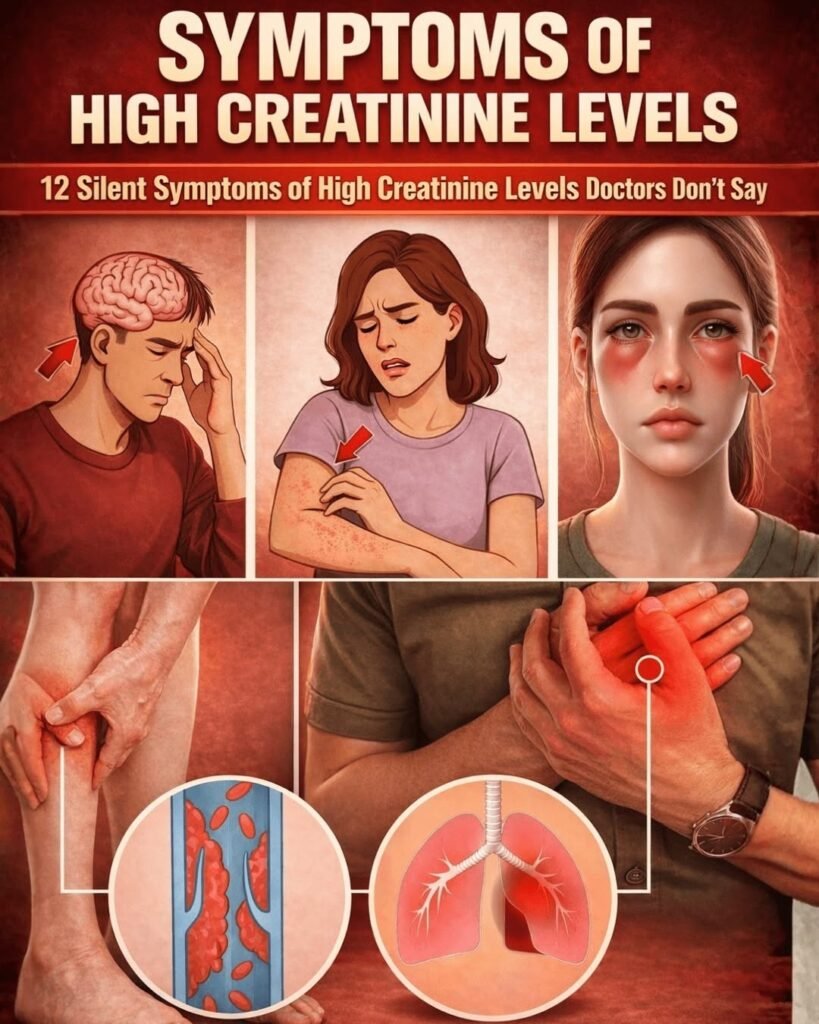
12 Subtle Signs of High Creatinine Levels That Could Point to Kidney Problems
Creatinine is a waste product produced naturally by your muscles. Healthy kidneys filter creatinine from the blood and remove it through urine.
When kidney function decreases, creatinine can build up in the bloodstream. A high creatinine level can therefore be an important clue that the kidneys aren’t filtering normally.
But there’s an important distinction: high creatinine itself usually doesn’t cause a specific set of symptoms. Many people with early kidney disease have few or no noticeable symptoms.
That’s why blood and urine testing is much more reliable than trying to identify kidney problems from symptoms alone.
Here are 12 changes that can sometimes occur when kidney function is impaired.
🩺 1. Changes in How Often You Urinate
Kidney problems can sometimes affect urination.
You may notice that you’re urinating more often, particularly at night, or that your usual urination pattern has changed.
However, frequent urination has many other possible causes, so it shouldn’t automatically be attributed to kidney disease.
🌙 2. Waking Up Frequently to Urinate
Needing to get up repeatedly during the night to urinate is called nocturia.
It can occur with several conditions, including kidney problems, diabetes, prostate problems, certain medications, and drinking large amounts of fluid before bed.
If nighttime urination becomes persistent or noticeably different from your usual pattern, discuss it with a healthcare professional.
💧 3. Swelling in the Legs or Ankles
Healthy kidneys help regulate fluid and salt balance.
When kidney function is significantly reduced, the body may retain extra fluid, which can contribute to swelling in the feet, ankles, legs, or around the eyes.
Persistent unexplained swelling deserves medical evaluation.
😴 4. Unusual or Persistent Fatigue
Feeling unusually tired can occur with reduced kidney function.
As kidney disease progresses, anemia and the buildup of waste products can contribute to fatigue and weakness.
However, tiredness is extremely common and can result from poor sleep, stress, nutritional problems, infections, and many other conditions.
🤢 5. Nausea or Loss of Appetite
More advanced kidney dysfunction can cause waste products to accumulate in the bloodstream.
Some people may develop nausea, reduced appetite, or changes in their sense of taste.
These symptoms aren’t specific to kidney disease and should be evaluated in context.
🤕 6. Headaches or Difficulty Concentrating
People with significant kidney dysfunction may experience difficulty concentrating, reduced alertness, or headaches.
These symptoms can also have numerous other causes, including dehydration, lack of sleep, medications, and other health conditions.
🧴 7. Dry or Itchy Skin
Persistent itching can occur in people with more advanced kidney disease.
Kidneys play an important role in maintaining the body’s chemical and mineral balance, and changes associated with kidney dysfunction can contribute to itching and dry skin.
Occasional dry skin, however, is extremely common and doesn’t necessarily indicate a kidney problem.
🍽️ 8. Changes in Taste or Bad Taste in the Mouth
Advanced kidney disease can sometimes cause changes in taste or an unpleasant taste in the mouth.
Some people may notice that foods taste different or that they have less interest in eating.
This symptom alone isn’t enough to identify a kidney problem.
🫁 9. Shortness of Breath
Shortness of breath can have many causes.
In significant kidney disease, fluid accumulation can contribute to breathing difficulties. Anemia can also contribute to fatigue and shortness of breath.
Sudden or severe difficulty breathing requires urgent medical attention, regardless of the suspected cause.
🦵 10. Muscle Cramps
Changes in fluid and electrolyte balance associated with kidney disease can contribute to muscle cramps or weakness.
However, cramps can also result from exercise, dehydration, medications, and other electrolyte problems.
🟤 11. Changes in Urine
Kidney or urinary problems can sometimes cause noticeable changes in urine, such as:
Persistent foaminess
Blood in the urine
Changes in urine amount
Unusual changes in appearance
Foamy urine can sometimes be associated with protein in the urine, while blood in the urine can have many possible causes.
Any persistent or unexplained change should be checked by a healthcare professional.
🧠 12. Confusion or Significant Drowsiness
Severe kidney dysfunction can cause waste products to accumulate in the bloodstream and affect the nervous system.
Confusion, extreme drowsiness, or major changes in mental alertness are not typical signs to ignore.
These symptoms can also indicate other serious conditions and warrant prompt medical assessment.
🧪 How Is Creatinine Measured?
Creatinine is usually measured with a blood test.
Healthcare professionals often use the creatinine result along with other information to estimate how well the kidneys are filtering blood.
One commonly reported measurement is the estimated glomerular filtration rate (eGFR).
A urine test may also be used to look for abnormalities such as albumin or other signs of kidney damage.
Why One Creatinine Result Isn’t Always Enough
Creatinine levels can be influenced by factors other than kidney disease.
For example:
Muscle mass
Age
Diet
Certain medications
Dehydration
Recent intense exercise
Some medical conditions
That’s why healthcare professionals interpret creatinine together with other clinical information rather than relying on one number alone.
⚠️ What Can Cause Creatinine to Rise?
An elevated creatinine level doesn’t automatically mean permanent kidney disease.
Possible causes include:
Dehydration
Being significantly dehydrated can temporarily affect kidney function and raise creatinine.
Kidney Disease
Damage or reduced function of the kidneys can prevent normal filtration of creatinine.
Certain Medications
Some medicines can affect kidney function or alter creatinine levels.
High Meat Intake
Eating a large amount of cooked meat shortly before testing can temporarily influence creatinine levels in some people.
Intense Exercise
Heavy physical activity can affect creatinine because creatinine is produced by muscle metabolism.
🩺 When Should You Talk to a Doctor?
Consider medical advice if you have persistent symptoms that could indicate kidney problems, particularly if you also have risk factors such as:
Diabetes
High blood pressure
A family history of kidney disease
Cardiovascular disease
Previous kidney problems
Regular use of certain medications that can affect the kidneys
Kidney disease can develop without obvious symptoms, which is one reason testing can be important for people at increased risk.
🚨 When to Seek Urgent Care
Seek urgent medical attention for symptoms such as:
Severe difficulty breathing
New confusion or inability to stay awake
Very little or no urine
Severe swelling
Chest pain
Sudden major changes in health
These symptoms can have many possible causes and should not be assumed to be caused by creatinine alone.
🥗 Supporting Kidney Health
There isn’t a single food or drink that can “clean” or “detox” the kidneys.
Instead, overall health habits matter.
Depending on your individual health needs, these may include:
Managing blood pressure
Managing blood glucose if you have diabetes
Staying adequately hydrated
Eating a balanced diet
Avoiding unnecessary use of medications that can harm the kidneys
Following your healthcare professional’s treatment plan
Getting recommended kidney tests when appropriate
If you already have kidney disease, dietary recommendations can be very individual. Don’t make major changes to protein, potassium, sodium, or fluid intake without professional guidance.
❓ Frequently Asked Questions
Does high creatinine always mean kidney disease?
No. Creatinine can be affected by muscle mass, diet, hydration, exercise, medications, and other factors. A healthcare professional interprets the result alongside eGFR and other information.
Can you have high creatinine without symptoms?
Yes. Early kidney disease can have few or no noticeable symptoms.
What is the most reliable way to check kidney function?
Blood testing for creatinine and eGFR, together with appropriate urine testing, can provide much more useful information than symptoms alone.
Can drinking more water lower creatinine?
Dehydration can affect creatinine, so restoring normal hydration may help when dehydration is the cause. But drinking excessive amounts of water cannot “flush out” chronic kidney disease and can be dangerous in some medical conditions.
Should I be worried about one abnormal result?
Not necessarily. Your healthcare professional may consider repeat testing and other factors to determine why the result is abnormal.
📌 The Bottom Line
A high creatinine level is a laboratory finding, not a diagnosis by itself.
Symptoms such as swelling, fatigue, changes in urination, nausea, itching, or changes in urine can occur with kidney problems, but they are not specific enough to tell you whether your creatinine is elevated.
Because early kidney disease may have no obvious symptoms, appropriate blood and urine testing is the best way to detect problems early.
If you’re concerned about your kidney health or have risk factors for kidney disease, speak with a healthcare professional rather than relying on a symptom checklist.
To provide the best experiences, we use technologies like cookies to store and/or access device information. Consenting to these technologies will allow us to process data such as browsing behavior or unique IDs on this site. Not consenting or withdrawing consent, may adversely affect certain features and functions.
Functional
Always active
The technical storage or access is strictly necessary for the legitimate purpose of enabling the use of a specific service explicitly requested by the subscriber or user, or for the sole purpose of carrying out the transmission of a communication over an electronic communications network.
Preferences
The technical storage or access is necessary for the legitimate purpose of storing preferences that are not requested by the subscriber or user.
Statistics
The technical storage or access that is used exclusively for statistical purposes.The technical storage or access that is used exclusively for anonymous statistical purposes. Without a subpoena, voluntary compliance on the part of your Internet Service Provider, or additional records from a third party, information stored or retrieved for this purpose alone cannot usually be used to identify you.
Marketing
The technical storage or access is required to create user profiles to send advertising, or to track the user on a website or across several websites for similar marketing purposes.