The Viral “One-Swipe” Trick for Cleaning Black Grout Lines
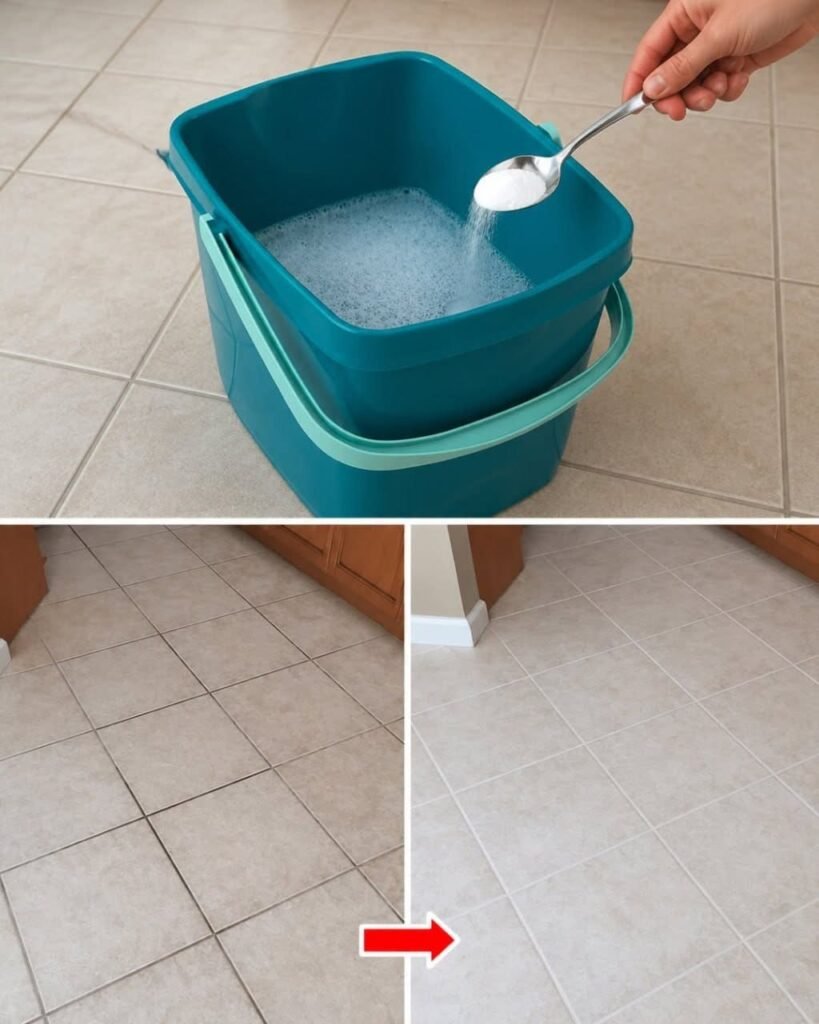
Tired of scrubbing stained grout? Discover an easy DIY cleaning method using hot water, dish soap, and baking soda to help loosen dirt and grime from tile grout.
Dirty grout lines can make an otherwise clean floor look dull and neglected. Over time, dust, grease, soap residue, and everyday grime can settle into the textured surface of grout, leaving it looking gray, brown, or almost black.
The good news? You don’t necessarily need harsh chemicals or hours of aggressive scrubbing.
A simple combination of hot water, dish soap, and baking soda can help loosen everyday grime and make grout easier to clean.
While the viral “one-swipe” claim is exaggerated—heavily stained grout may still require brushing—the method can make routine cleaning considerably easier.
🧽 What You’ll Need
1 bucket of hot water
A few squirts of dish soap
2–3 tablespoons of baking soda
Stiff-bristled grout brush
Clean sponge or microfiber cloth
Clean water for rinsing
Rubber gloves, optional
For More Stubborn Stains
Some heavily stained areas may require a purpose-made grout cleaner rather than a homemade mixture. Always check the product label and test any cleaner on a small, inconspicuous area first.
🧼 How to Clean Black Grout Lines
Step 1: Remove Loose Dirt
Before applying your cleaning solution, sweep or vacuum the floor.
Removing loose dust and debris first prevents you from turning surface dirt into muddy residue.
Step 2: Prepare the Cleaning Solution
Fill a bucket with hot water.
Add a few squirts of dish soap and approximately 2–3 tablespoons of baking soda.
Stir carefully until the baking soda is dispersed.
Avoid creating excessive foam, which can make rinsing more difficult.
Step 3: Apply the Mixture
Dip a stiff grout brush into the solution.
Work the brush along the dirty grout lines, making sure the surface becomes damp.
Don’t simply wipe immediately. Allow the solution to sit for approximately 5 minutes so it has time to loosen surface grime.
Step 4: Gently Scrub
After soaking, use the grout brush to work over the stained areas.
For lightly soiled grout, only a small amount of brushing may be necessary.
For darker or older stains, you may need several passes.
Step 5: Wipe Away the Dirt
Use a clean, damp microfiber cloth or sponge to remove the loosened residue.
Rinse the cloth frequently so you don’t spread the dirt back across the floor.
Step 6: Rinse With Clean Water
Finish by wiping the area with clean water.
This removes remaining soap and baking-soda residue.
Allow the floor to dry completely.
🔎 Why Does This Method Work?
Each ingredient has a simple purpose.
Baking Soda
Baking soda is a mild abrasive and can help loosen surface grime when used with gentle scrubbing.
Dish Soap
Dish soap is designed to help lift grease and oily residue, which can contribute to dirty-looking surfaces.
Hot Water
Warm or hot water can help loosen some types of household residue and makes the cleaning solution easier to spread.
Together, these ingredients can be useful for routine household grime, although they won’t remove every type of stain.
⚠️ Important: Not Every Dark Grout Stain Is Dirt
Before scrubbing aggressively, consider why the grout is dark.
Black or dark discoloration may be caused by:
Everyday dirt
Grease
Soap residue
Mold or mildew
Water staining
Old grout sealer
Permanent discoloration
Damaged or deteriorating grout
If the discoloration remains after cleaning, the problem may not simply be surface dirt.
🦠 What If the Grout Has Mold or Mildew?
If you suspect mold or mildew, don’t assume baking soda and dish soap will completely eliminate the problem.
The underlying moisture issue should also be addressed.
Improve ventilation, repair leaks, and keep the area as dry as practical.
For extensive or recurring mold growth, consider professional advice.
🚫 Cleaning Mistakes to Avoid
Don’t Mix Household Cleaners
Never combine cleaning products randomly.
In particular, never mix bleach with ammonia, acids, vinegar, or other cleaners, because dangerous fumes or chemical reactions can occur.
If you’re switching from one cleaning product to another, rinse the surface thoroughly first and follow the manufacturer’s directions.
Don’t Scrub Too Aggressively
Excessive force can damage grout or wear away old grout sealer.
Start gently and increase the effort only when necessary.
Don’t Leave Floors Soaking Wet
Excess moisture can be problematic for certain flooring materials and may contribute to moisture-related problems.
Use enough solution to clean the grout without flooding the floor.
🏠 Can You Use Baking Soda on Every Floor?
No.
Different flooring materials require different care.
This method is most appropriate for compatible ceramic or porcelain tile grout, but always check the flooring manufacturer’s recommendations.
Be particularly cautious with:
Natural stone
Marble
Limestone
Travertine
Unsealed porous surfaces
Delicate or specialty flooring
When in doubt, test a small hidden area or use a cleaner specifically formulated for your flooring.
✨ How to Keep Grout Cleaner for Longer
Once you’ve cleaned your grout, a few simple habits can reduce future buildup.
Sweep Regularly
Loose dirt is less likely to become embedded when it’s removed regularly.
Wipe Spills Quickly
Food, oils, and colored liquids can leave stains if they’re allowed to sit.
Keep Bathrooms Ventilated
Good ventilation can help reduce excess moisture.
Clean Small Areas Frequently
Regular light cleaning is usually easier than waiting until grout becomes heavily stained.
Consider Grout Sealing
A suitable grout sealer may help protect certain grout surfaces from moisture and staining. Follow the manufacturer’s instructions for application and reapplication.
❓ Frequently Asked Questions
Does baking soda really clean black grout?
It can help loosen surface dirt and grime, especially when combined with dish soap and gentle scrubbing. However, it won’t remove every type of discoloration.
Does the “one-swipe” method really work?
It can work surprisingly well on light surface grime, but heavily stained grout may require repeated brushing and additional cleaning.
Can I use vinegar with baking soda?
Mixing baking soda and vinegar creates a visible fizzing reaction, but much of that reaction simply neutralizes the two substances. More importantly, you should avoid experimenting with mixtures of household cleaners without checking that they’re compatible with your surface and safe to use.
How long should I leave the cleaning solution on grout?
For this method, around 5 minutes is a reasonable starting point for routine grime. Don’t allow the surface to dry out completely, and follow flooring-care instructions.
Can this permanently whiten grout?
No cleaning method can guarantee permanent results. Grout can become dirty again through normal household use, and some discoloration may be permanent.
🧽 Final Thoughts
Cleaning dirty grout doesn’t always have to mean spending hours on your hands and knees.
A simple mixture of hot water, dish soap, and baking soda can help loosen everyday grime and make grout easier to scrub.
The key is to give the solution a few minutes to work, use a suitable brush, and rinse the surface thoroughly afterward.
And remember: the viral “one-swipe” result isn’t guaranteed. For ordinary dirt, however, this inexpensive method is worth trying before reaching for stronger cleaning products.
✨ Clean grout can make an entire floor look fresher—even when you haven’t changed anything else!
To provide the best experiences, we use technologies like cookies to store and/or access device information. Consenting to these technologies will allow us to process data such as browsing behavior or unique IDs on this site. Not consenting or withdrawing consent, may adversely affect certain features and functions.
Functional
Always active
The technical storage or access is strictly necessary for the legitimate purpose of enabling the use of a specific service explicitly requested by the subscriber or user, or for the sole purpose of carrying out the transmission of a communication over an electronic communications network.
Preferences
The technical storage or access is necessary for the legitimate purpose of storing preferences that are not requested by the subscriber or user.
Statistics
The technical storage or access that is used exclusively for statistical purposes.The technical storage or access that is used exclusively for anonymous statistical purposes. Without a subpoena, voluntary compliance on the part of your Internet Service Provider, or additional records from a third party, information stored or retrieved for this purpose alone cannot usually be used to identify you.
Marketing
The technical storage or access is required to create user profiles to send advertising, or to track the user on a website or across several websites for similar marketing purposes.