Baking Soda to Remove Very Dark Spots: Natural Recipes and Important Safety Tips
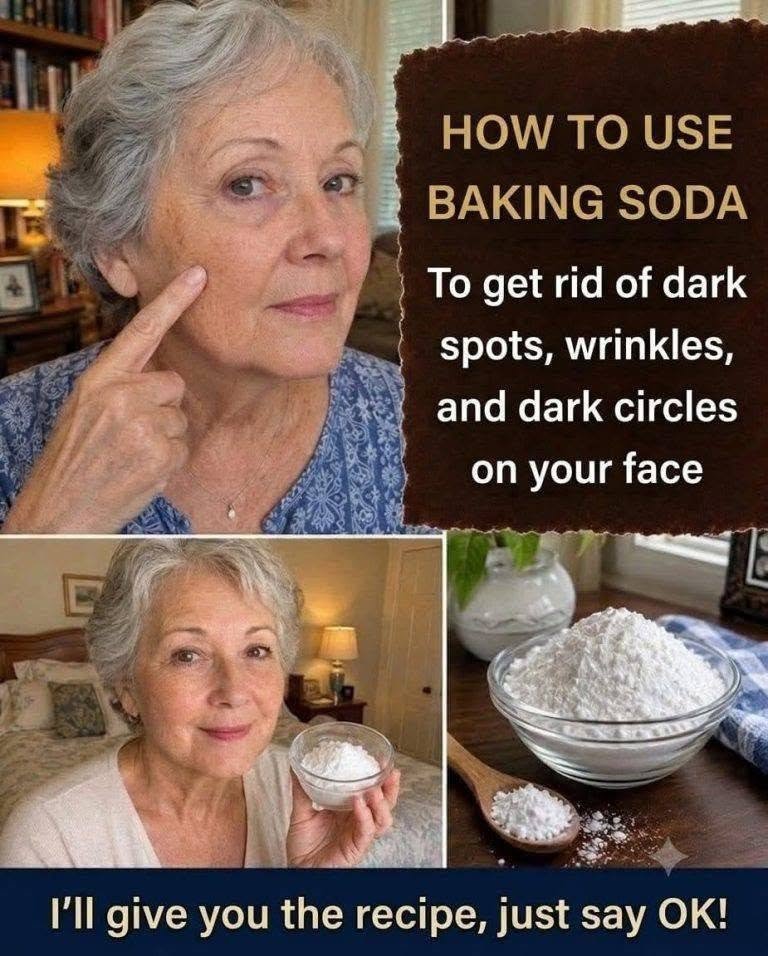
Baking soda has long been a staple in kitchens around the world, but did you know this versatile ingredient is also being used for skincare? From dark spots to wrinkles and dark circles, many people are turning to this affordable, natural remedy to improve their skin’s appearance.
But before you rush to try it, it’s important to understand both the potential benefits and the risks. Let’s explore how baking soda can be used for skincare and what you need to know to use it safely.
Why People Use Baking Soda for Skincare
Baking soda (sodium bicarbonate) has several properties that make it appealing for facial treatments:
Gentle exfoliation: The fine granules can help buff away dead skin cells and break down dirt and oils
Mild whitening effect: It may help lighten dark spots and promote a more even skin tone when used as part of a skincare routine
Anti-inflammatory properties: Some users report reduced inflammation and smoother skin texture
Affordability: It’s an inexpensive alternative to commercial skincare products
Important Safety Warning: What Experts Say
Before trying baking soda on your face, you should know that dermatologists and skincare experts have significant concerns:
The pH Problem: Baking soda has a high pH of 9.0, making it too alkaline for facial skin. Your skin’s natural pH is around 5.5 (slightly acidic), and disrupting this balance can:
Damage the skin’s protective barrier
Cause dryness and irritation
Lead to increased breakouts
Make skin more susceptible to bacteria and environmental damage
Expert Recommendation: Health experts warn that baking soda can damage the skin’s pH balance and recommend caution when using it on your face. Many dermatologists suggest gentler alternatives specifically formulated for facial skin.
If You Choose to Use Baking Soda: Safe Application Tips
If you decide to try baking soda despite the warnings, follow these guidelines to minimize risks:
General Safety Rules:
Patch test first: Apply a small amount to your inner arm and wait 24 hours
Limit frequency: Use no more than 1-2 times per week
Don’t leave on too long: Rinse off after 10-15 minutes maximum
Moisturize after: Always follow with a gentle moisturizer
Stop if irritated: Discontinue use immediately if you experience redness, burning, or discomfort
Avoid sensitive areas: Be especially careful around the delicate under-eye area
Popular Baking Soda Recipes for Dark Spots
Recipe 1: Basic Baking Soda Paste
This simple method is the most common approach:
Ingredients:
1 teaspoon baking soda
1-2 teaspoons water
Instructions:
Mix baking soda and water to create a thick paste
Apply directly to dark spots or affected areas
Gently massage in circular motions for 1-2 minutes
Leave on for 10-15 minutes
Rinse thoroughly with lukewarm water
Pat dry and moisturize
Recipe 2: Baking Soda and Lemon Juice
Lemon juice contains vitamin C and may help brighten skin:
Ingredients:
1 teaspoon baking soda
1/2 teaspoon fresh lemon juice
1/2 teaspoon water (if needed for consistency)
Instructions:
Mix ingredients to form a paste
Apply to dark spots only (avoid surrounding skin)
Leave for 5-10 minutes (no longer—lemon can be irritating)
Rinse thoroughly
Apply sunscreen before going outside (lemon makes skin sun-sensitive)
Note: This combination can be harsh. Use with extreme caution and no more than once a week.
Recipe 3: Baking Soda and Honey Mask
Honey adds moisture and has antibacterial properties:
Ingredients:
1 teaspoon baking soda
1 tablespoon raw honey
1/2 teaspoon warm water
Instructions:
Mix all ingredients into a smooth paste
Apply to clean face, avoiding eye area
Leave on for 10 minutes
Gently massage in circular motions
Rinse thoroughly with warm water
Moisturize well
Recipe 4: Baking Soda and Coconut Oil
Coconut oil provides hydration to counteract drying effects:
Ingredients:
1 tablespoon baking soda
1/2 to 1 teaspoon coconut oil
Instructions:
Mix baking soda with coconut oil to create a paste
Apply to affected areas
Gently massage for 1-2 minutes
Leave on for 10 minutes
Rinse well and pat dry
This combination may create a moisturizing effect on the skin.
Recipe 5: Oatmeal and Baking Soda Scrub
Oatmeal soothes while baking soda exfoliates:
Ingredients:
2 teaspoons finely ground oatmeal
1 teaspoon baking soda
1-2 teaspoons water or milk
Instructions:
Mix all ingredients to form a paste
Apply to face using gentle circular motions
Leave on for 10-15 minutes
Rinse thoroughly
This combination can help remove dead skin cells and unclog pores
For Dark Circles Under Eyes: Extra Caution Needed
The skin under your eyes is extremely delicate and thin. Experts advise being very careful when using baking soda in this area.
If you choose to try it:
Use a much more diluted mixture (1/4 teaspoon baking soda to 1 tablespoon water)
Apply for no more than 5 minutes
Be extremely gentle—no scrubbing
Consider gentler alternatives like cucumber slices or cold compresses instead
For Wrinkles and Fine Lines
While some suggest baking soda’s mild abrasiveness can temporarily smooth skin and make fine lines less visible through exfoliation, dermatologists generally don’t recommend it for treating facial wrinkles.
Better alternatives for wrinkles:
Retinol products
Vitamin C serums
Hyaluronic acid
Professional treatments recommended by a dermatologist
What to Expect: Realistic Results
It’s important to have realistic expectations:
Results vary: Baking soda may help fade the appearance of dark spots and uneven skin tone, but results vary significantly by individual
Not immediate: You won’t see dramatic results overnight
Temporary effects: Any improvement is typically temporary and requires ongoing use
May not work for everyone: Some people see no improvement at all
Safer, Dermatologist-Recommended Alternatives
If you’re concerned about dark spots, wrinkles, or dark circles, consider these gentler, clinically-proven alternatives:
For Dark Spots:
Vitamin C serums
Niacinamide
Alpha arbutin
Kojic acid
Professional chemical peels
Prescription hydroquinone (from a doctor)
For Wrinkles:
Retinoids (retinol, tretinoin)
Peptides
Antioxidant serums
Sunscreen daily (most important!)
Professional treatments like laser therapy
For Dark Circles:
Caffeine-based eye creams
Vitamin K creams
Adequate sleep
Cold compresses
Treating underlying allergies
Concealer makeup
When to See a Dermatologist
Consult a healthcare professional if:
Dark spots appear suddenly or change in appearance
You have persistent skin discoloration
Home remedies cause irritation or worsening
You want personalized treatment recommendations
You have sensitive skin or existing skin conditions
The Bottom Line
While baking soda is a popular home remedy for dark spots, wrinkles, and dark circles, it comes with significant risks due to its high pH level. The potential for skin irritation, barrier damage, and long-term skin health issues makes it a controversial choice for facial skincare.
Our recommendation: If you’re struggling with skin concerns, it’s better to invest in products specifically formulated for facial use or consult with a dermatologist who can recommend safe, effective treatments tailored to your skin type and concerns.
Natural doesn’t always mean safe for your skin. Your face is the first thing people see—treat it with care and use products designed for its delicate needs.
⚠️ IMPORTANT MEDICAL DISCLAIMER
This content is for educational and informational purposes only and is not intended as medical advice, diagnosis, or treatment. Always seek the advice of a qualified dermatologist or healthcare provider with any questions you may have about skincare treatments. The information provided about baking soda is based on popular home remedies, but many skincare experts warn against using baking soda on facial skin due to pH imbalance concerns. Never disregard professional medical advice or delay seeking it because of something you have read. Perform a patch test before trying any new skincare treatment. Discontinue use immediately if you experience irritation, redness, or discomfort.
To provide the best experiences, we use technologies like cookies to store and/or access device information. Consenting to these technologies will allow us to process data such as browsing behavior or unique IDs on this site. Not consenting or withdrawing consent, may adversely affect certain features and functions.
Functional
Always active
The technical storage or access is strictly necessary for the legitimate purpose of enabling the use of a specific service explicitly requested by the subscriber or user, or for the sole purpose of carrying out the transmission of a communication over an electronic communications network.
Preferences
The technical storage or access is necessary for the legitimate purpose of storing preferences that are not requested by the subscriber or user.
Statistics
The technical storage or access that is used exclusively for statistical purposes.The technical storage or access that is used exclusively for anonymous statistical purposes. Without a subpoena, voluntary compliance on the part of your Internet Service Provider, or additional records from a third party, information stored or retrieved for this purpose alone cannot usually be used to identify you.
Marketing
The technical storage or access is required to create user profiles to send advertising, or to track the user on a website or across several websites for similar marketing purposes.