Does Your Blood Type Determine How Long You Live? The Truth About Reaching 100
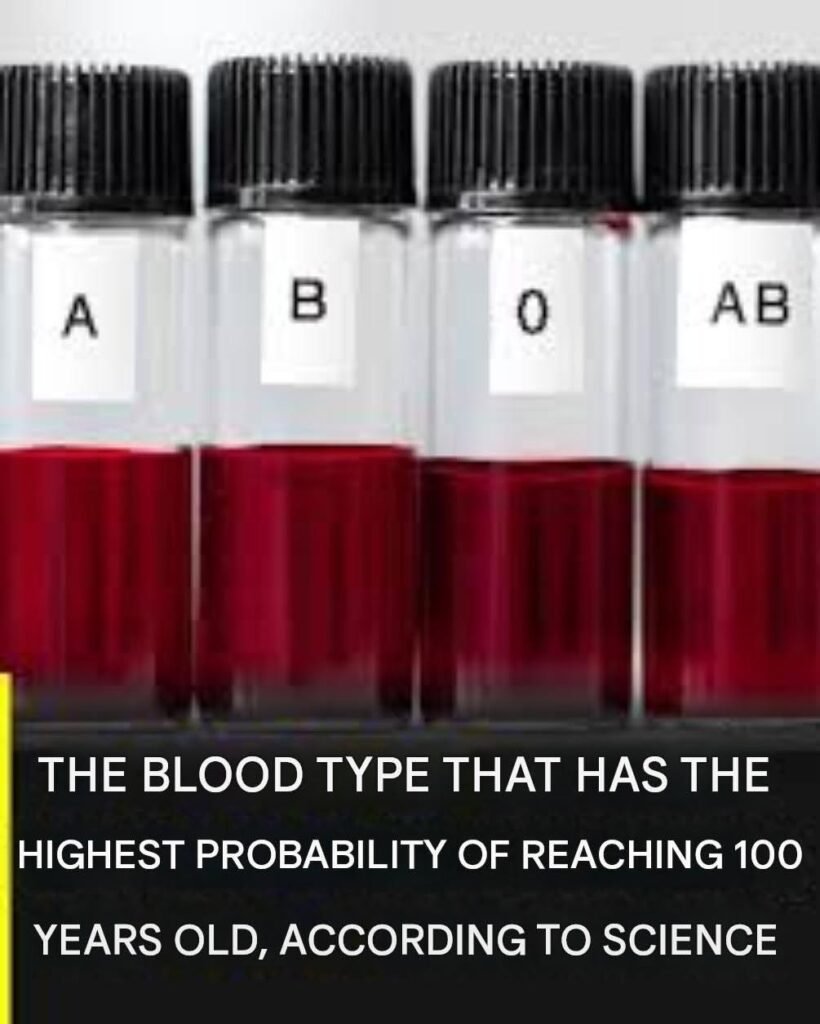
Scroll through social media, and you’ll eventually stumble upon a graphic featuring four blood test tubes—A, B, O, and AB—with a bold claim: “The Blood Type That Has The Highest Probability of Reaching 100 Years Old, According to Science.”
It’s a tantalizing idea. If you could just know your blood type, could you predict your lifespan? The short answer is no. While there is a fascinating link between blood types and certain health conditions, the science of longevity is far more complex than a single biological marker.
Here is what the actual research says about blood types and reaching the century mark.
The Origin of the “Blood Type B” Claim
The viral claim that Blood Type B holds the secret to a long life stems from a specific study conducted in Japan in 2004. Researchers compared 269 centenarians (people over 100 years old) with a control group of over 7,000 people.
The study found that Blood Type B was more common in the centenarian group (29.4%) than in the control group (21.9%). This led researchers to suggest a possible link between blood type B and “exceptional longevity.”
However, this study is now two decades old, had a relatively small sample size of centenarians, and its findings have not been consistently replicated in larger, more diverse populations.
The Counter-Evidence: Blood Type O and Other Findings
If you look at more recent research, the picture becomes much murkier. Other studies have pointed to different blood types as having an advantage.
The Stanford Study (2025): A recent report highlighted research from Stanford University involving over 800 centenarians. This study found that the O variant of the ABO gene appeared frequently among the longest-lived individuals. Researchers noted that blood type O is associated with a lower risk of heart attacks, strokes, and certain cancers.
The Chinese Centenarian Study (2020): One of the largest studies on the topic, which analyzed 2,201 Chinese centenarians, concluded that ABO blood groups are not associated with longevity at all. The authors noted that earlier positive findings, like the one for blood type B, often suffered from small sample sizes or regional biases.
The Verdict: Genetics Is Just One Piece of the Puzzle
The conflicting evidence means no single blood type can be definitively labeled the “key” to reaching 100. Even the researchers who found a link to blood type B emphasized that “responsible mechanisms need to be investigated.”
The ABO gene is just one of several genes—including CDKN2B, APOE, and SH2B3—that have been linked to longevity. More importantly, genetics is only a small part of the equation.
Professor Stuart Kim, a geneticist at Stanford University, stated it best: “It’s not enough to have good genes. Scientific evidence consistently shows that factors such as a balanced diet, regular physical activity, emotional well-being, and access to preventive health care are just as vital.”
What Actually Determines Longevity?
If your blood type isn’t a crystal ball, what is? According to gerontologists and longevity researchers, the following factors play a far more significant role in how long you live:
Diet: A balanced diet rich in fruits, vegetables, whole grains, and lean proteins (like the Mediterranean diet) is consistently linked to a longer lifespan.
Exercise: Regular physical activity reduces the risk of chronic diseases and supports cognitive health.
Sleep: Quality sleep is essential for cellular repair and brain function.
Stress Management: Chronic stress accelerates aging. Practices like meditation, deep breathing, and social connection help mitigate this.
Preventive Care: Regular check-ups, cancer screenings, and managing conditions like high blood pressure and diabetes are critical.
The Bottom Line
Your blood type is an interesting piece of your biological puzzle, but it is not a predetermined fate. Whether you are A, B, O, or AB, the most reliable path to a long, healthy life remains the same: eat well, move often, manage stress, and stay connected.
Don’t let viral graphics dictate your health anxiety. Focus on the habits you can control, and your body will thank you for decades to come.
Disclaimer: This article is for informational purposes only and is not a substitute for professional medical advice, diagnosis, or treatment. Always seek the advice of your physician or other qualified health provider with any questions you may have regarding a medical condition.
To provide the best experiences, we use technologies like cookies to store and/or access device information. Consenting to these technologies will allow us to process data such as browsing behavior or unique IDs on this site. Not consenting or withdrawing consent, may adversely affect certain features and functions.
Functional
Always active
The technical storage or access is strictly necessary for the legitimate purpose of enabling the use of a specific service explicitly requested by the subscriber or user, or for the sole purpose of carrying out the transmission of a communication over an electronic communications network.
Preferences
The technical storage or access is necessary for the legitimate purpose of storing preferences that are not requested by the subscriber or user.
Statistics
The technical storage or access that is used exclusively for statistical purposes.The technical storage or access that is used exclusively for anonymous statistical purposes. Without a subpoena, voluntary compliance on the part of your Internet Service Provider, or additional records from a third party, information stored or retrieved for this purpose alone cannot usually be used to identify you.
Marketing
The technical storage or access is required to create user profiles to send advertising, or to track the user on a website or across several websites for similar marketing purposes.