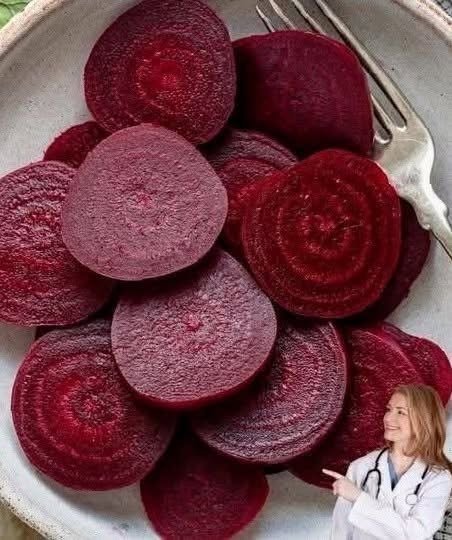
Here’s What Actually Happens in Your Body When You Start Adding Beets to Your Meals
Beets are one of those polarizing vegetables—people either love their earthy sweetness or can’t stand them. But regardless of where you stand on the flavor spectrum, the science is clear: adding beets to your regular meals triggers a cascade of beneficial changes throughout your body. From your blood vessels to your brain, this deep-red root vegetable packs a surprising punch. Here’s a detailed look at what happens inside your body when beets become a regular part of your diet.
Your Blood Pressure Drops
The most well-researched benefit of beets is their impact on blood pressure, and it happens through a fascinating biological mechanism. Beets are exceptionally rich in dietary nitrates, which your body converts into nitric oxide—a molecule that relaxes and widens blood vessels.
Research involving 68 people with hypertension found that drinking just one glass (250ml) of beet juice daily lowered high blood pressure by an average of 7.7/5.2 mmHg within four weeks. The effects were noticeable within one hour, peaked after four hours, and were still evident 24 hours later. The study also found that the ability of blood vessels to dilate improved by around 20%, and arterial stiffness was significantly reduced. This means beets don’t just lower blood pressure—they actually improve the elasticity of your arterial walls.
Your Workout Performance Improves
If you exercise regularly, beets might become your new secret weapon. The nitric oxide produced from beet nitrates improves blood flow, which means oxygen and nutrients reach your working muscles more efficiently, while metabolic byproducts like lactate are cleared more effectively.
Studies show that beetroot juice can boost endurance by 2–16% in trained individuals and cut oxygen cost by up to 25% during submaximal exercise. For optimal performance benefits, beets should be consumed 60 to 90 minutes before a workout to let nitrate levels peak. One study found that female endurance athletes who drank beetroot juice before exercising saw a nearly 5% increase in VO2 max—a key measure of aerobic capacity.
Your Inflammation Levels Decrease
Beets are rich in betalains, a class of potent antioxidants and anti-inflammatory compounds that give beets their vibrant color. These compounds help counter the harmful effects of free radicals—unstable atoms that contribute to oxidative stress and increase the risk of heart disease, obesity, and cancer.
In one study, participants who drank 250 milliliters of beetroot juice daily for two weeks experienced a significant drop in inflammatory markers. This anti-inflammatory effect is one of the key reasons beets are linked to a reduced risk of chronic diseases.
Your Digestive Health Gets a Boost
One cup of raw beets provides 3.81 grams of fiber—about 13.61% of the daily recommended value. Fiber is essential for digestive health: it adds bulk to your diet, helps you feel full longer, and regulates bowel movements. But beets do more than just provide bulk. Beet fiber also promotes the growth of beneficial gut bacteria, supporting a healthier microbiome.
Many adults don’t meet the recommended daily intake of fiber, which is about 30 grams. Adding beets to your meals is an easy way to close that gap.
Your Liver Gets Support
Your liver does the heavy work of filtering your blood and detoxifying your body, and beets offer some impressive support for this hardworking organ. The betaine in beets—a plant-based amino acid—can support liver function in people with non-alcoholic fatty liver disease. Beets also contain betalains, which help reduce inflammation and promote detoxification, while improving liver enzyme function and increasing bile production to support the breakdown of fats.
Your Brain Function May Improve
The same nitric oxide that helps your blood vessels also supports brain health. As blood flow naturally decreases with age, nitric oxide helps improve the circulation of oxygen-rich blood to your brain. Some research has found that beet juice helps increase blood flow to the frontal lobe—the part of the brain responsible for working memory and decision-making.
Your Heart Disease Risk Drops
The combined effects of lower blood pressure, reduced inflammation, and improved blood vessel function add up to a meaningful reduction in cardiovascular risk. Research suggests that nitric oxide may reduce the risk of heart attacks and strokes. Beets also contain betaine, which helps lower blood levels of homocysteine—a chemical at high levels can increase your risk for heart disease.
What to Watch Out For
While beets are incredibly healthy, there are a few things to keep in mind. The most harmless—and most surprising—side effect is beeturia: red beets can turn your urine or stools pink or red. While this can be alarming if you don’t expect it, it’s completely harmless and not a sign of any problem.
People with a history of kidney stones should be cautious, as eating more than one cup of beets a day may contribute to kidney stones. Additionally, because beets relax blood vessels, they can cause blood pressure to drop too low in some people, especially those already taking blood pressure medication.
How to Add Beets to Your Diet
The versatility of beets makes them easy to incorporate into your meals. Roast them for a sweet, caramelized side dish, grate them raw into salads for a crunchy texture, blend them into smoothies for a nutrient-packed breakfast, or juice them for a concentrated nitrate boost. Beet greens are also edible and nutritious—don’t throw them away.
The Bottom Line
Adding beets to your meals is one of the simplest, most evidence-backed dietary changes you can make. From lowering blood pressure and improving athletic performance to supporting digestion and liver health, the benefits are wide-ranging and scientifically validated. Whether you roast them, juice them, or eat them raw, your body will thank you for every serving.
Disclaimer: This article is for informational purposes only and is not a substitute for professional medical advice. Always consult with your healthcare provider before making significant dietary changes, especially if you have existing health conditions or are taking medications.
To provide the best experiences, we use technologies like cookies to store and/or access device information. Consenting to these technologies will allow us to process data such as browsing behavior or unique IDs on this site. Not consenting or withdrawing consent, may adversely affect certain features and functions.
Functional
Always active
The technical storage or access is strictly necessary for the legitimate purpose of enabling the use of a specific service explicitly requested by the subscriber or user, or for the sole purpose of carrying out the transmission of a communication over an electronic communications network.
Preferences
The technical storage or access is necessary for the legitimate purpose of storing preferences that are not requested by the subscriber or user.
Statistics
The technical storage or access that is used exclusively for statistical purposes.The technical storage or access that is used exclusively for anonymous statistical purposes. Without a subpoena, voluntary compliance on the part of your Internet Service Provider, or additional records from a third party, information stored or retrieved for this purpose alone cannot usually be used to identify you.
Marketing
The technical storage or access is required to create user profiles to send advertising, or to track the user on a website or across several websites for similar marketing purposes.