Found a Giant Wasp in Your Home? Here’s What It Really Is
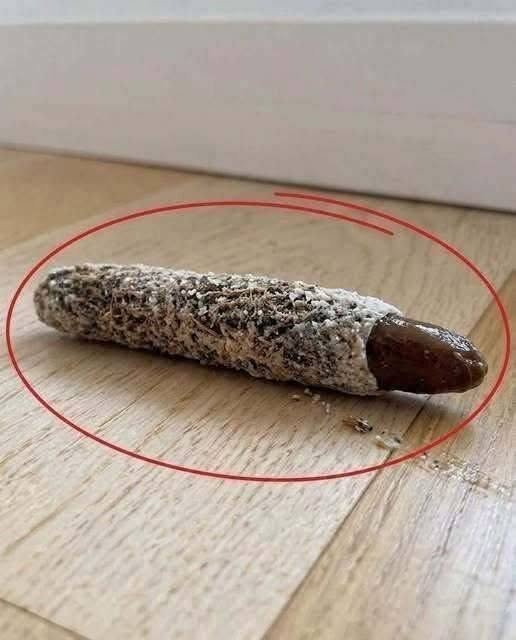
Imagine walking past your bedroom door and spotting something unusual on the floor: an insect roughly the length of your finger, with a mottled grey-brown texture and a dark, bulbous tip. You’ve never seen anything like it, and no one in the house knows where it came from.
It’s a startling find, and it’s one that many homeowners have encountered. While it may look like a bizarre piece of debris or an alien creature, the object in the image is almost certainly the hibernating queen of a European wasp (Vespula germanica) or a European hornet.
What Is This Insect?
The insect in the photo is a queen wasp. Specifically, it appears to be a European wasp queen, which is significantly larger than the worker wasps you see buzzing around your picnic in summer. While worker wasps are typically about 12–15mm long, queens can reach 20mm or more, approaching twice the size of their workers.
The mottled, greyish-brown appearance is unusual for a wasp, but it makes sense in the context of hibernation. During winter dormancy, insects may accumulate debris or appear dull as their bodies slow down and their normal coloration becomes less vibrant. The dark brown tip at one end is the insect’s head, tucked in for protection.
Why Is It in Your Home?
European wasp queens are solitary creatures during the winter months. In late summer and early autumn, new queens emerge from the nest, mate, and then seek out sheltered locations to hibernate through the cold season.
According to entomologists, these overwintering queens can be found in a variety of protected spots, including:
Under bark or in woodpiles
In sheds and garages
Inside wall cavities or roof spaces
In clothing left outside
Finding one inside your home means she likely entered through a gap in a window frame, door, or wall, seeking a dry, frost-protected spot for the winter. As temperatures begin to warm in spring, these queens become active again and attempt to find their way outside—which is why you might find one crawling across your floor.
Are They Dangerous?
At this stage of her life, a queen wasp is generally not aggressive. She has no colony to defend and is focused solely on survival and finding her way out. However, it’s still wise to treat her with caution.
European wasps are known for being more aggressive than bees when disturbed, and they can sting multiple times. While a single queen is unlikely to pose a serious threat unless provoked, it’s best not to handle her bare-handed.
What Should You Do?
If you find a queen wasp in your home, here are the recommended steps:
Don’t panic. She is likely sluggish and disoriented, not aggressive.
Capture her safely. Use the “glass and card” method: place a clear glass or jar over the insect, slide a piece of stiff cardboard underneath, and carry the whole thing outside.
Release her. Place her in a sheltered outdoor spot, such as under a hedge or in a woodpile, where she can continue her hibernation or begin her spring activities.
Check for entry points. Inspect the area where you found her for gaps in windows, doors, or walls. Sealing these openings will help prevent other insects from entering.
If you find multiple queens or signs of an active nest (such as a steady stream of wasps entering and exiting a hole in your wall), it’s best to contact a pest control professional. Nests in wall cavities can grow to contain thousands of wasps by late summer and should be treated by experts.
The Fascinating Life of a Queen Wasp
The queen wasp you found is a remarkable survivor. Of the thousands of queens produced by a colony in autumn, only about 2–4% survive the winter to establish a new nest in spring. Most die from cold, damp conditions, or become prey for birds, mice, or other animals.
Those that do survive emerge in spring when temperatures consistently reach around 12–15°C. The queen then builds a small, golf-ball-sized nest from chewed wood pulp and lays her first eggs. Once these hatch into worker wasps, the colony grows rapidly, and the queen spends the rest of her life laying eggs while her daughters take over the work of foraging and nest maintenance.
The Bottom Line
That mysterious object on your floor isn’t a mutant insect or a piece of strange debris—it’s a queen wasp emerging from her winter dormancy. While startling to encounter, she is generally harmless if left alone. Simply relocate her outside and take steps to seal any entry points in your home to prevent future visits from these unexpected winter guests.
To provide the best experiences, we use technologies like cookies to store and/or access device information. Consenting to these technologies will allow us to process data such as browsing behavior or unique IDs on this site. Not consenting or withdrawing consent, may adversely affect certain features and functions.
Functional
Always active
The technical storage or access is strictly necessary for the legitimate purpose of enabling the use of a specific service explicitly requested by the subscriber or user, or for the sole purpose of carrying out the transmission of a communication over an electronic communications network.
Preferences
The technical storage or access is necessary for the legitimate purpose of storing preferences that are not requested by the subscriber or user.
Statistics
The technical storage or access that is used exclusively for statistical purposes.The technical storage or access that is used exclusively for anonymous statistical purposes. Without a subpoena, voluntary compliance on the part of your Internet Service Provider, or additional records from a third party, information stored or retrieved for this purpose alone cannot usually be used to identify you.
Marketing
The technical storage or access is required to create user profiles to send advertising, or to track the user on a website or across several websites for similar marketing purposes.