Don’t Be Fooled by Supermarket Meat: The Real Difference Between These Two Ground Beef Blocks
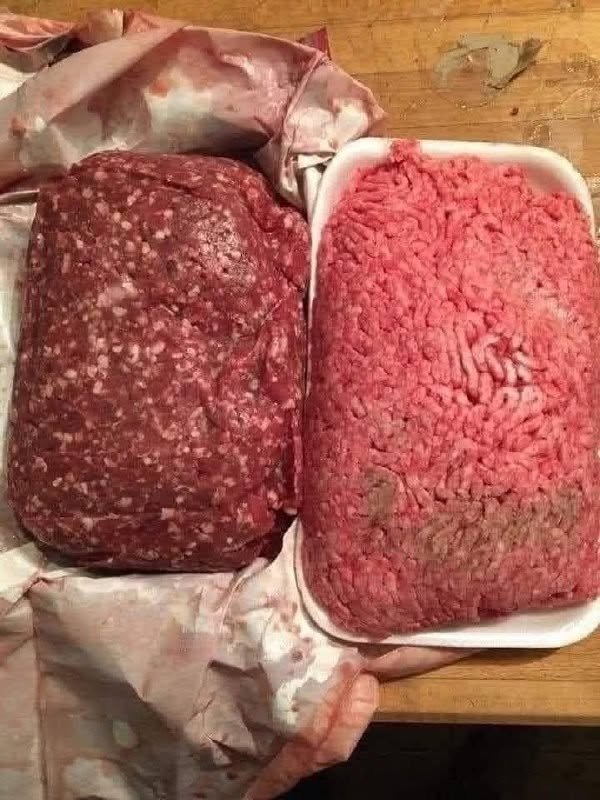
If you’ve ever stood in a grocery store aisle and compared the pre-packaged ground beef to the meat you get from your local butcher, you’ve likely noticed a striking difference. The image above perfectly illustrates this visual disparity. On the left, you have a dark red, coarse, and visibly fatty block of meat wrapped in butcher paper. On the right, you have a uniform, bright pink, almost paste-like block sitting on a styrofoam tray.
Many shoppers are unaware of exactly why this difference exists. Supermarkets rely on the average consumer picking up the cheapest, most visually appealing package, but often, they are selling you highly processed meat disguised as fresh product. Here is the truth behind the meat counter and how to ensure you aren’t getting fooled.
The Visual Truth: Why the Meat Looks Different
1. Grind Size and Texture The meat on the left is coarsely ground. You can see distinct pieces of dark red muscle and white fat. This texture is essential for trapping juices during cooking, resulting in a burger that is tender and moist. The meat on the right is finely ground and appears almost homogenized. It looks like a solid block of pink paste. This is often the result of “Lean Finely Textured Beef” (LFTB), commonly known as “pink slime,” which is mixed in to lower the fat content and stretch the meat. It often lacks the natural texture and flavor of real beef.
2. The “Bright Pink” Illusion We are taught that bright red meat is “fresh.” However, in large-scale industrial processing, meat is often exposed to high-oxygen modified atmosphere packaging (MAP) to keep it looking red for weeks. Butchers, on the other hand, wrap meat in butcher paper, which blocks out oxygen. Without oxygen, fresh beef naturally turns a dark, almost purple or dark red color (deoxymyoglobin). Once you open the butcher’s paper, the meat “blooms” back to red. The bright pink color in the supermarket tray is often an artificial chemical reaction, not a sign of freshness.
3. Water and Additives The supermarket block on the right may also contain added water, sodium, or preservatives to increase its weight and shelf life. When you cook that meat, it often shrinks dramatically as the water boils out, leaving you with a dry, flavorless product. The coarse block on the left is 100% pure meat and fat, meaning it will hold its shape and weight when cooked.
The Health and Taste Factors
Why does this matter beyond looks?
Flavor: Fat carries flavor. The coarse grind on the left retains a higher, natural fat ratio (often 80/20 or 70/30), ensuring your burgers are juicy and beefy. The uniform block on the right is often overly lean, resulting in dry, cardboard-like burgers.
Cooking Experience: Fine, paste-like meat has a larger surface area, which causes it to “steam” rather than “sear” in the pan. This prevents the Maillard reaction (the browning that gives meat its delicious crust) from happening.
Nutritional Integrity: You are paying for meat, not fillers. When you buy high-quality coarse ground beef, you know exactly what you are putting into your body.
5 Ways to Protect Yourself at the Meat Counter
Don’t let supermarkets fool you. Here is a quick checklist for your next grocery run:
Shop Local: Whenever possible, buy from a local butcher. They grind meat daily, often from whole cuts, ensuring freshness and no additives.
Look for Texture: If the meat looks like a solid, uniform block with no visible grain or distinct fat pieces, put it back. You want to see chunks of fat and muscle.
Request “Coarse Grind”: If you are at a counter with a grinder, ask the butcher to grind it coarse. This preserves the juices and texture.
Avoid Styrofoam Trays: Meat sealed in plastic trays is designed for shelf-life, not quality. Opt for meat wrapped in butcher paper.
Check the Color: Don’t be afraid of darker red meat. As mentioned, dark red or purple is natural fresh beef. Bright pink often signals industrial processing or gas flushing.
Conclusion
The meat on the left represents tradition, quality, and transparency. The meat on the right represents big-industry cost-cutting and mass production. While pre-packaged supermarket meat might save you a dollar or two at the cash register, it costs you heavily in flavor, texture, and nutrition.
Next time you are shopping for a delicious burger or meat sauce, skip the styrofoam tray, head to the butcher counter, and ask for a coarse grind. Your taste buds (and your health) will thank you.
Disclaimer: This post is for informational purposes only and is not intended as medical advice. Always consult with a professional regarding your dietary needs.
To provide the best experiences, we use technologies like cookies to store and/or access device information. Consenting to these technologies will allow us to process data such as browsing behavior or unique IDs on this site. Not consenting or withdrawing consent, may adversely affect certain features and functions.
Functional
Always active
The technical storage or access is strictly necessary for the legitimate purpose of enabling the use of a specific service explicitly requested by the subscriber or user, or for the sole purpose of carrying out the transmission of a communication over an electronic communications network.
Preferences
The technical storage or access is necessary for the legitimate purpose of storing preferences that are not requested by the subscriber or user.
Statistics
The technical storage or access that is used exclusively for statistical purposes.The technical storage or access that is used exclusively for anonymous statistical purposes. Without a subpoena, voluntary compliance on the part of your Internet Service Provider, or additional records from a third party, information stored or retrieved for this purpose alone cannot usually be used to identify you.
Marketing
The technical storage or access is required to create user profiles to send advertising, or to track the user on a website or across several websites for similar marketing purposes.