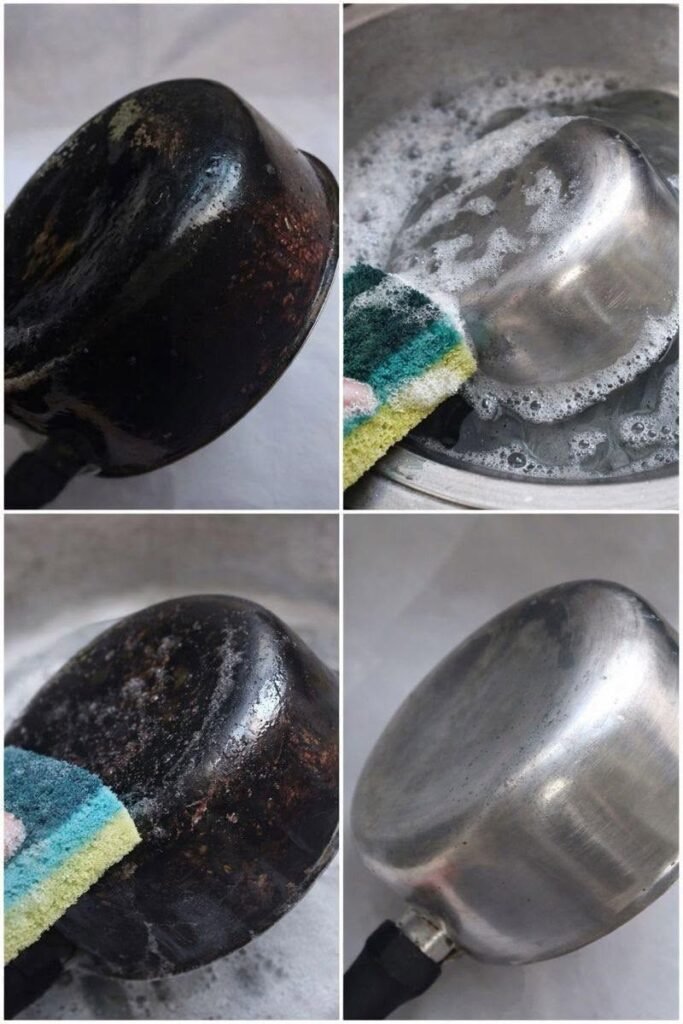
Here’s How to Clean the Underside of Pots and Pans to Make Them Look Like New
There’s something deeply satisfying about a clean kitchen, but while we diligently scrub the inside of our cookware, the bottoms of our pots and pans often tell a different story. Burnt-on grease, carbon buildup, and discoloration can make even your best cookware look old and neglected.
The good news? With the right techniques and a little elbow grease, you can restore the shine to your pot and pan bottoms and make them look almost brand new.
Why Pot Bottoms Get So Dirty
The underside of your cookware accumulates burnt grease, food splatters, and carbon deposits every time you cook. Over time, these residues build up and create that stubborn, darkened layer that seems impossible to remove. Heat exposure, gas flames, and cooking splatters all contribute to this unsightly buildup.
Before You Start: Safety First
Work in a well-ventilated area
Wear rubber gloves to protect your hands
Never mix ammonia with bleach or vinegar
Test any method on a small area first if you’re concerned about damaging the surface
Method 1: The Baking Soda and Vinegar Power Combo
This natural, effective method works wonders on most cookware:
What You’ll Need:
Baking soda
White vinegar
Dish soap
Scrubbing pad or sponge
Hot water
Steps:
Sprinkle a generous amount of baking soda over the entire bottom of the pot or pan
Spray or pour white vinegar over the baking soda—it will fizz and bubble
Add a few drops of dish soap to help break down grease
Let the mixture sit for 15-30 minutes
Scrub vigorously with a non-abrasive scrubbing pad
Rinse thoroughly with hot water and repeat if necessary
For severely burnt pans, you can let the baking soda and vinegar mixture sit overnight before scrubbing
www.maytag.com.
Method 2: The Baking Soda Paste Method
This gentle yet effective approach is perfect for regular maintenance:
What You’ll Need:
Baking soda
Water
Scrubbing pad
Steps:
Mix baking soda with enough water to create a thick paste
Apply the paste liberally to the bottom of the pan
Let it sit for 30 minutes to an hour
Scrub with a scouring pad, adding more water as needed
Rinse thoroughly and dry savorylotus.com
Method 3: The Deep Clean Soak
For heavily soiled cookware, a soaking method works best:
What You’ll Need:
Equal parts water and white vinegar
Baking soda
Large container or your sink
Scrubbing pad
Steps:
Fill a large container or your sink with equal parts water and vinegar
Add a tablespoon of baking soda
Submerge the pot or pan completely
Let it soak overnight (8-12 hours)
Remove and scrub with a pad
Wash as usual with dish soap www.maytag.com
Method 4: The Hydrogen Peroxide Solution
This powerful combination tackles tough, burnt-on grease:
What You’ll Need:
Baking soda
Hydrogen peroxide (3%)
Dish soap (blue Dawn works well)
Scrubbing pad
Steps:
Sprinkle baking soda generously over the pan bottom
Pour hydrogen peroxide over the baking soda to create a paste
Add a few drops of dish soap
Let sit for 30-60 minutes
Scrub thoroughly
Rinse well with hot water grease-cycle.com
Method 5: The Ammonia Method (For Extreme Cases)
For the toughest buildup, ammonia is incredibly effective:
What You’ll Need:
Household ammonia
Large plastic bag (heavy-duty garbage bag)
Rubber gloves
Well-ventilated area (preferably outdoors)
Steps:
Place the pot or pan inside a large plastic bag
Add about 1/2 cup of ammonia to the bag (not directly on the pan)
Seal the bag tightly
Let it sit for several hours or overnight
Remove the pan (wear gloves!)
Wash thoroughly with soap and water
Rinse extremely well www.mykitchenescapades.com
Important: Always use ammonia outdoors or in a very well-ventilated area. Never mix ammonia with bleach or other cleaners.
Method 6: The Lemon and Baking Soda Fresh Approach
This natural method leaves your pans smelling fresh:
What You’ll Need:
Baking soda
Fresh lemon (cut in half)
Hot water
Steps:
Wet the bottom of the pan
Sprinkle generously with baking soda
Scrub with the cut side of a lemon
The citric acid helps break down residue while the baking soda provides gentle abrasion
Rinse thoroughly www.thekitchn.com
Tips for Best Results
Choose the Right Tools:
Use non-abrasive scrubbing pads to avoid scratching stainless steel
For tough jobs, a stainless steel scrubber works well on stainless steel cookware
Avoid steel wool on non-stick surfaces
Be Patient:
Stubborn buildup may require multiple treatments
Don’t rush the soaking process—time does much of the work for you
Gentle, consistent scrubbing is better than aggressive scraping
Prevention is Key:
Wipe down pot bottoms after each use
Clean spills and splatters before they burn on
Use burner sizes that match your cookware to minimize side buildup
Consider using heat diffusers to prevent scorching
Maintaining Your Clean Cookware
Once you’ve restored your pots and pans to their former glory, keep them looking great:
Clean immediately after use: Wipe the bottom before residues harden
Avoid high heat: Excessive heat causes more burning and buildup
Store properly: Keep cookware separated to prevent scratching
Regular maintenance: Do a quick clean with baking soda monthly
When to Replace Instead of Clean
While most cookware can be restored, consider replacement if:
The pan is warped or damaged
Non-stick coating is peeling or flaking
There are deep pits or corrosion in the metal
The handle is loose or damaged
The Bottom Line
Clean pot and pan bottoms aren’t just about appearances—they’re a sign of well-maintained cookware that will last longer and perform better. Whether you choose the natural baking soda and vinegar method or need the heavy-duty power of ammonia, the key is consistency and patience.
Start with the gentlest method and work your way up to stronger solutions if needed. Your cookware will thank you, and you’ll enjoy the satisfaction of seeing that beautiful shine return to your kitchen essentials.
Remember, a little regular maintenance goes a long way. Clean those pot bottoms today, and keep them looking new with simple weekly care!
⚠️ SAFETY DISCLAIMER
Always work in well-ventilated areas when using cleaning products. Wear appropriate protective gear including gloves and eye protection. Never mix cleaning chemicals, especially ammonia and bleach. Read and follow all product labels and safety instructions. Test cleaning methods on a small area first if concerned about damaging cookware surfaces.
To provide the best experiences, we use technologies like cookies to store and/or access device information. Consenting to these technologies will allow us to process data such as browsing behavior or unique IDs on this site. Not consenting or withdrawing consent, may adversely affect certain features and functions.
Functional
Always active
The technical storage or access is strictly necessary for the legitimate purpose of enabling the use of a specific service explicitly requested by the subscriber or user, or for the sole purpose of carrying out the transmission of a communication over an electronic communications network.
Preferences
The technical storage or access is necessary for the legitimate purpose of storing preferences that are not requested by the subscriber or user.
Statistics
The technical storage or access that is used exclusively for statistical purposes.The technical storage or access that is used exclusively for anonymous statistical purposes. Without a subpoena, voluntary compliance on the part of your Internet Service Provider, or additional records from a third party, information stored or retrieved for this purpose alone cannot usually be used to identify you.
Marketing
The technical storage or access is required to create user profiles to send advertising, or to track the user on a website or across several websites for similar marketing purposes.