From Age 65, How Often Should You Shower? And Why Over-Washing May Affect Your Skin
As we get older, skin can become thinner, drier, and more sensitive. That means showering habits may need to focus less on a fixed number of showers and more on skin comfort, cleanliness, activity level, and individual needs.
There is no universal rule that everyone over 65 must shower a specific number of times each week.
🚿 How Often Should Older Adults Shower?
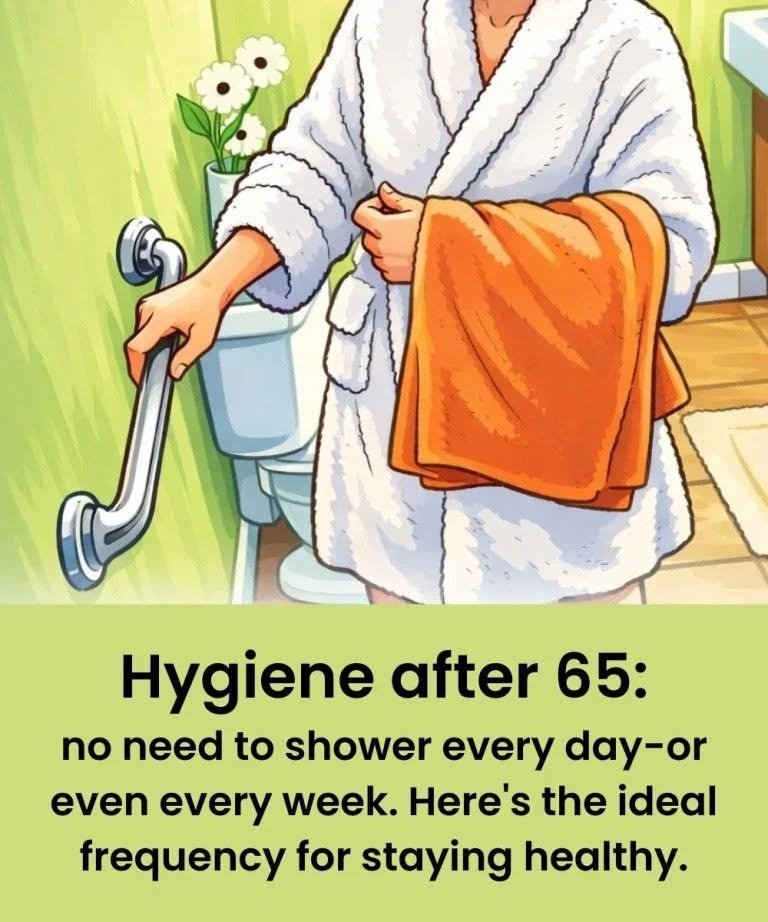
For many older adults, several full showers per week may be sufficient, with additional washing of the face, hands, underarms, groin, and feet as needed.
However, the ideal routine depends on lifestyle.
Someone who exercises regularly, works outdoors, sweats heavily, or lives in a hot climate may need to shower more frequently.
Someone who spends most of the day indoors and has very dry or sensitive skin may be comfortable showering less often.
The goal is good hygiene without unnecessarily irritating the skin.
🧴 Why Can Over-Washing Be a Problem?
Frequent long showers, especially with very hot water and strong soaps, can remove some of the skin’s natural oils.
These oils help support the skin barrier and retain moisture.
Over-washing may contribute to:
Dry or flaky skin
Tightness after bathing
Itching
Irritation
Increased sensitivity
Older skin can be particularly prone to dryness, so a gentler routine may be more comfortable.
🌡️ Avoid Very Hot Water
A steaming-hot shower may feel relaxing, but hot water can worsen dryness.
Instead, choose warm or lukewarm water and keep showers reasonably short.
After bathing, gently pat the skin dry rather than rubbing vigorously.
🧼 Choose a Gentle Cleanser
You don’t necessarily need harsh soap over the entire body every time you shower.
A mild, fragrance-free cleanser can be a better option for dry or sensitive skin.
Pay particular attention to areas where sweat, dirt, or body oils accumulate.
🧴 Moisturize After Showering
One of the simplest ways to reduce dryness is applying a moisturizer shortly after bathing.
A cream or ointment can help retain moisture, particularly when applied while the skin is still slightly damp.
🧓 Your Routine Should Fit Your Lifestyle
There is no magic “65+ shower schedule.”
Consider:
If You’re Physically Active
More frequent showers may be appropriate after sweating or exercise.
If You Have Very Dry Skin
Reducing shower frequency and using gentler products may help reduce irritation.
If You Live in a Hot Climate
You may want to wash more often because of sweating, but not every shower needs to be a long, hot, full-body scrub.
If You Have a Skin Condition
Follow the bathing and skincare recommendations provided by your healthcare professional.
⚠️ When Skin Changes Need Attention
Persistent itching, cracking, redness, sores, unexplained rashes, or significant changes in the skin shouldn’t automatically be blamed on showering.
If a skin problem continues despite changing your bathing routine, consider speaking with a healthcare professional.
🚿 Simple Shower Routine for Older Adults
A gentle routine can be:
Use warm rather than very hot water.
Keep the shower reasonably short.
Use a mild cleanser.
Avoid vigorous scrubbing.
Rinse thoroughly.
Pat the skin dry gently.
Apply moisturizer afterward.
Adjust the frequency based on activity, sweating, climate, and skin condition.
The Bottom Line
After age 65, there is no single number of showers that everyone needs. For many people, showering several times per week and washing key areas as needed can provide good hygiene while reducing unnecessary dryness.
The bigger issue is often how you shower: very hot water, long showers, harsh cleansers, and vigorous scrubbing can be particularly drying.
Listen to your skin and adjust your routine to your lifestyle and individual needs.
To provide the best experiences, we use technologies like cookies to store and/or access device information. Consenting to these technologies will allow us to process data such as browsing behavior or unique IDs on this site. Not consenting or withdrawing consent, may adversely affect certain features and functions.
Functional
Always active
The technical storage or access is strictly necessary for the legitimate purpose of enabling the use of a specific service explicitly requested by the subscriber or user, or for the sole purpose of carrying out the transmission of a communication over an electronic communications network.
Preferences
The technical storage or access is necessary for the legitimate purpose of storing preferences that are not requested by the subscriber or user.
Statistics
The technical storage or access that is used exclusively for statistical purposes.The technical storage or access that is used exclusively for anonymous statistical purposes. Without a subpoena, voluntary compliance on the part of your Internet Service Provider, or additional records from a third party, information stored or retrieved for this purpose alone cannot usually be used to identify you.
Marketing
The technical storage or access is required to create user profiles to send advertising, or to track the user on a website or across several websites for similar marketing purposes.