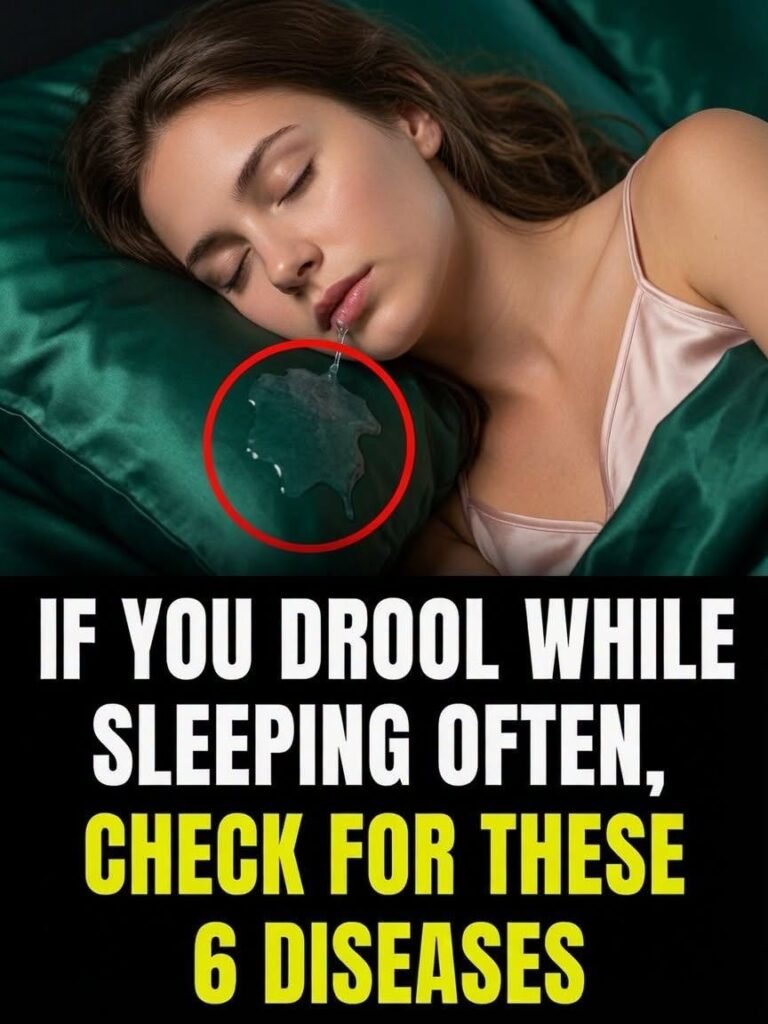
If You Drool While Sleeping Often, It Could Be a Warning Sign of These 6 Health Conditions
Drooling during sleep is common and, by itself, is usually nothing to worry about. When you fall asleep, the muscles involved in swallowing relax, and saliva can collect in the mouth. Sleeping on your side or stomach can also make saliva more likely to escape.
However, frequent or newly increased drooling can sometimes be associated with certain health conditions or sleep-related problems. It is important not to assume that drooling automatically means something is wrong. Instead, look at the bigger picture and pay attention to other symptoms.
Here are six possible reasons why someone may drool regularly while sleeping.
1. Nasal Congestion or Allergies
A blocked nose can make it harder to breathe comfortably through your nose while sleeping. You may naturally start breathing through your mouth, which can make nighttime drooling more noticeable.
Seasonal allergies, colds, sinus congestion, and other causes of nasal blockage can contribute to this problem.
What may help: Treating the underlying congestion and keeping the bedroom comfortable may reduce mouth breathing and nighttime drooling.
2. Acid Reflux
Gastroesophageal reflux disease (GERD) occurs when stomach contents frequently flow back toward the esophagus. Some people experience increased saliva production in response to reflux, sometimes called “water brash.”
If drooling occurs alongside frequent heartburn, a sour taste, throat irritation, or symptoms that are worse at night, reflux may be worth discussing with a healthcare professional.
3. Sleep Apnea
Obstructive sleep apnea causes repeated interruptions in breathing during sleep because the upper airway becomes blocked or narrowed.
People with sleep apnea may breathe through their mouth while sleeping, which can contribute to drooling. Other possible signs include loud snoring, gasping during sleep, morning headaches, difficulty concentrating, and excessive daytime sleepiness.
If several of these symptoms occur together, speaking with a doctor is a good idea because untreated sleep apnea can affect overall health.
4. Difficulty Swallowing
Problems with swallowing, known medically as dysphagia, can sometimes lead to saliva collecting in the mouth.
Occasional drooling is different from persistent drooling accompanied by difficulty swallowing food or liquids. If you regularly cough or choke while eating, feel as though food gets stuck, or have unexplained changes in swallowing, seek medical advice.
5. Certain Medications
Some medications can affect saliva production, muscle control, or swallowing. This can occasionally make drooling more noticeable during sleep.
If nighttime drooling began after starting a new medication or changing a dose, do not stop the medication on your own. Instead, ask your doctor or pharmacist whether it could be contributing to the change.
6. Neurological Conditions
Certain neurological disorders can affect muscle control, swallowing, or the ability to manage saliva. In these situations, drooling may occur alongside other symptoms.
Examples can include changes in movement, speech, swallowing, coordination, or facial muscle control.
This does not mean that frequent drooling is evidence of a neurological disease. There are many much more common explanations. But persistent drooling combined with new neurological symptoms deserves medical evaluation.
When Should You Talk to a Doctor?
Occasional drooling during sleep is generally harmless. Consider talking with a healthcare professional if it is:
Happening frequently or suddenly becoming worse
Accompanied by difficulty swallowing
Associated with choking or coughing at night
Occurring with loud snoring or pauses in breathing
Accompanied by unusual daytime sleepiness
Happening together with new changes in speech, movement, or coordination
A doctor can look at your symptoms, medications, sleep habits, and medical history to determine whether further evaluation is necessary.
Simple Steps That May Help
Depending on the cause, a few everyday changes may make nighttime drooling less noticeable:
Keep Your Nose Clear
If congestion is contributing to mouth breathing, addressing the underlying nasal problem may help.
Review Your Sleeping Position
Some people notice more drooling when sleeping on their side or stomach. Experimenting with a comfortable sleeping position may help.
Pay Attention to Reflux Symptoms
If you regularly experience nighttime heartburn or a sour taste, mention these symptoms to a healthcare professional.
Track Other Symptoms
Keeping a simple note of when drooling occurs and whether it is accompanied by snoring, congestion, reflux, or swallowing difficulties can provide useful information during a medical appointment.
The Bottom Line
Drooling while sleeping is usually not a serious problem. It can happen because of sleeping position, mouth breathing, nasal congestion, or normal changes in saliva and swallowing during sleep.
However, persistent or newly worsening drooling—especially when combined with snoring, breathing problems, swallowing difficulties, or other new symptoms—should not simply be ignored.
Rather than worrying about the worst-case scenario, focus on the pattern of symptoms and speak with a qualified healthcare professional if something has changed or concerns you.
This article is for general educational purposes only and is not a diagnosis or substitute for professional medical advice.
To provide the best experiences, we use technologies like cookies to store and/or access device information. Consenting to these technologies will allow us to process data such as browsing behavior or unique IDs on this site. Not consenting or withdrawing consent, may adversely affect certain features and functions.
Functional
Always active
The technical storage or access is strictly necessary for the legitimate purpose of enabling the use of a specific service explicitly requested by the subscriber or user, or for the sole purpose of carrying out the transmission of a communication over an electronic communications network.
Preferences
The technical storage or access is necessary for the legitimate purpose of storing preferences that are not requested by the subscriber or user.
Statistics
The technical storage or access that is used exclusively for statistical purposes.The technical storage or access that is used exclusively for anonymous statistical purposes. Without a subpoena, voluntary compliance on the part of your Internet Service Provider, or additional records from a third party, information stored or retrieved for this purpose alone cannot usually be used to identify you.
Marketing
The technical storage or access is required to create user profiles to send advertising, or to track the user on a website or across several websites for similar marketing purposes.