Which Door Would You Choose? A Fun Personality Test That Reveals Your Problem-Solving Style
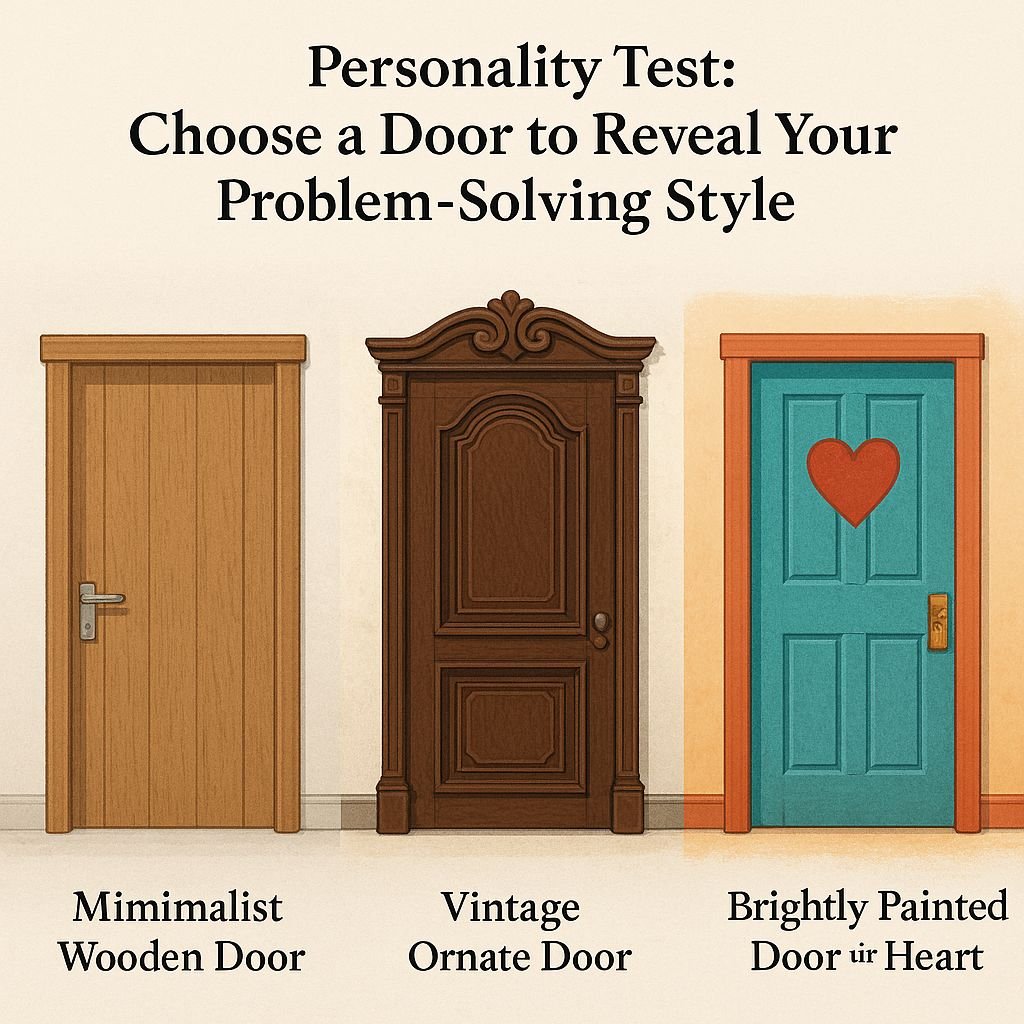
🚪 Door 3 – The Brightly Painted Door
If you picked the Brightly Painted Door, you’re someone who leads with optimism, creativity, and emotional intelligence.
The heart symbol suggests you value relationships and often consider how your decisions affect the people around you.
Your Strongest Traits
Compassionate
Creative
Optimistic
Friendly
Open-minded
Your Problem-Solving Style
You usually:
Trust your intuition.
Look for solutions that benefit everyone.
Think creatively.
Stay positive even during setbacks.
Your Greatest Strength
You inspire others with your enthusiasm and ability to find hope in difficult situations.
Your Challenge
Sometimes emotions may influence your decisions more than facts.
What Does Your Choice Really Mean?
Visual personality quizzes are popular because they encourage us to reflect on our preferences and decision-making habits.
Your choice may be influenced by many factors, including:
Personal experiences
Current mood
Favorite colors
Design preferences
Emotional associations
Life values
Rather than predicting your future or defining your personality, these quizzes simply offer an enjoyable opportunity for self-discovery.
Different Problem-Solving Styles
Everyone approaches challenges differently. Some people rely on logic, while others trust creativity or intuition.
Common problem-solving approaches include:
Logical Thinkers
They focus on facts, structure, and careful planning before making decisions.
Analytical Thinkers
They enjoy researching information and examining every possible outcome.
Creative Thinkers
They look for original ideas and innovative solutions that others may overlook.
Empathetic Thinkers
They consider how decisions affect people and prioritize cooperation and understanding.
No single style is better than another. In fact, combining different perspectives often leads to the strongest solutions.
Why People Enjoy Personality Quizzes
Image-based personality tests remain popular because they are:
Fun and interactive
Easy to share with friends
Great conversation starters
Encouraging of self-reflection
Entertaining without requiring much time
Although they aren’t scientifically validated, they often spark interesting discussions about personality, values, and decision-making.
Can One Choice Define Your Personality?
No.
Human personality is shaped by many influences, including:
Life experiences
Education
Culture
Relationships
Personal values
Genetics
A single choice cannot fully describe who you are. Instead, think of this quiz as a fun way to explore different aspects of your personality.
Final Thoughts
Whether you chose the Minimalist Wooden Door, the Vintage Ornate Door, or the Brightly Painted Door, your selection reflects what feels most appealing to you in this moment.
The most important lesson isn’t which door you choose—it’s understanding that every challenge in life can be approached in different ways. Logic, creativity, and empathy all have their place, and the best solutions often come from balancing these strengths.
So, which door would you choose? Share your answer with friends and compare your results—you might be surprised by the different personalities each door attracts!
Frequently Asked Questions (FAQ)
Is this personality test scientifically accurate?
No. This quiz is intended for entertainment and self-reflection only. It is not based on validated psychological research.
Why do visual personality tests feel relatable?
They encourage intuitive choices and personal reflection, making them engaging even though they don’t provide scientific personality analysis.
Can my problem-solving style change over time?
Yes. Experience, education, and personal growth can influence how you approach challenges and make decisions.
Should I make important life decisions based on this quiz?
No. Personality quizzes like this are meant for fun and self-reflection, not for making significant life, career, or relationship decisions.
To provide the best experiences, we use technologies like cookies to store and/or access device information. Consenting to these technologies will allow us to process data such as browsing behavior or unique IDs on this site. Not consenting or withdrawing consent, may adversely affect certain features and functions.
Functional
Always active
The technical storage or access is strictly necessary for the legitimate purpose of enabling the use of a specific service explicitly requested by the subscriber or user, or for the sole purpose of carrying out the transmission of a communication over an electronic communications network.
Preferences
The technical storage or access is necessary for the legitimate purpose of storing preferences that are not requested by the subscriber or user.
Statistics
The technical storage or access that is used exclusively for statistical purposes.The technical storage or access that is used exclusively for anonymous statistical purposes. Without a subpoena, voluntary compliance on the part of your Internet Service Provider, or additional records from a third party, information stored or retrieved for this purpose alone cannot usually be used to identify you.
Marketing
The technical storage or access is required to create user profiles to send advertising, or to track the user on a website or across several websites for similar marketing purposes.