The Best Sleeping Positions for Spinal Health: What Science Says
Sleeping on Your Back
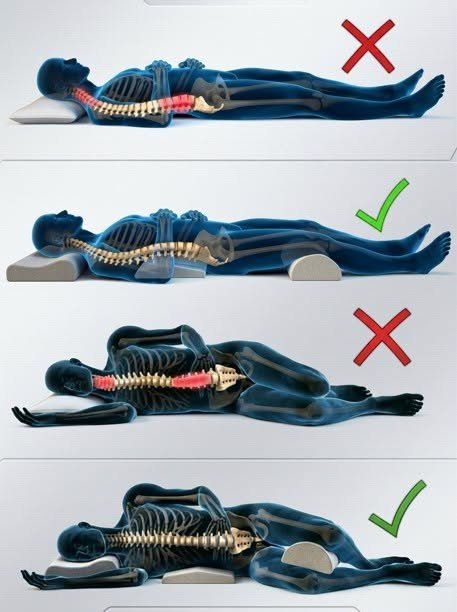
Back sleeping is often recommended because it distributes body weight evenly across the mattress. However, lying completely flat may leave a gap beneath the lower back, increasing stress on the lumbar spine.
Less Supportive Position
Sleeping flat on your back without additional support may allow the lower back to arch excessively, especially if your mattress is firm.
Better Alternative
Placing a pillow beneath your knees helps:
Maintain the natural curve of the lower back
Reduce pressure on the lumbar spine
Relax the hip flexor muscles
Improve overall spinal alignment
For many people with lower back discomfort, this simple adjustment provides noticeable relief.
Sleeping on Your Side
Side sleeping is one of the most common sleeping positions worldwide.
Without proper support, however, the upper leg may rotate forward, causing the pelvis to twist and the spine to fall out of alignment.
Less Supportive Position
Sleeping on your side without a pillow between your knees may contribute to:
Hip discomfort
Lower back strain
Pelvic rotation
Knee pressure
Better Alternative
Placing a pillow between your knees helps:
Keep the hips aligned
Reduce twisting of the pelvis
Support the lower back
Improve overall comfort
Some people also benefit from hugging a pillow to reduce shoulder strain.
Benefits of Proper Pillow Placement
Using pillows strategically can provide several advantages:
Better spinal alignment
Reduced pressure on the hips and knees
Improved circulation
Less muscle tension
Reduced lower back pain
More restful sleep
These simple adjustments often cost very little but can significantly improve sleep quality.
Choosing the Right Pillow
Not every pillow offers the same level of support.
A good pillow should:
Support the natural curve of your neck
Keep your head level with your spine
Avoid forcing your head too high or too low
Match your preferred sleeping position
Back sleepers generally need medium-height pillows, while side sleepers often require thicker pillows to fill the gap between the shoulder and head.
What About Mattress Support?
Even the best sleeping position cannot fully compensate for an unsuitable mattress.
A supportive mattress should:
Keep your spine in a neutral position
Prevent excessive sinking
Distribute body weight evenly
Provide adequate pressure relief
Medium-firm mattresses are often recommended for many adults with back pain, though personal comfort remains important.
Additional Tips for Better Sleep
Healthy sleep habits go beyond posture alone.
Consider these practices:
Stretch gently before bed.
Maintain a consistent sleep schedule.
Replace worn-out pillows when they lose support.
Sleep on a supportive mattress.
Avoid sleeping in positions that consistently cause pain.
Stay physically active during the day.
When Should You Seek Medical Advice?
Occasional stiffness after sleeping is common, but persistent pain should not be ignored.
Consult a healthcare professional if you experience:
Chronic back pain
Numbness or tingling
Pain radiating down your legs
Severe neck stiffness
Difficulty sleeping due to pain
Symptoms that worsen despite changing your sleeping position
A physician or physical therapist can help identify the underlying cause and recommend appropriate treatment.
Common Myths About Sleeping Positions
Myth: There is only one correct sleeping position.
False. The healthiest position varies depending on your body, medical conditions, and comfort.
Myth: Sleeping without a pillow is always healthier.
Not necessarily. Proper neck support is important for maintaining spinal alignment.
Myth: A firmer mattress is always better.
Research suggests that a medium-firm mattress often provides a good balance of support and comfort for many people, but individual preferences and health conditions matter.
Final Thoughts
Small changes in the way you sleep can have a significant impact on your comfort and spinal health. Whether you sleep on your back or your side, using pillows to support your body’s natural alignment may help reduce pressure on your back, hips, and knees.
Remember that these recommendations are general guidelines and may not be suitable for everyone. If you experience persistent pain or have a medical condition affecting your spine, consult a qualified healthcare professional for personalized advice.
Frequently Asked Questions (FAQ)
Is sleeping on your back the healthiest position?
For many people, sleeping on the back with a pillow under the knees helps maintain a neutral spine. However, it may not be ideal for individuals with certain conditions, such as obstructive sleep apnea.
Why should I place a pillow between my knees?
A pillow between the knees helps keep the hips and pelvis aligned while side sleeping, reducing stress on the lower back.
Can changing my sleeping position reduce back pain?
For some people, improving sleeping posture and using supportive pillows can reduce discomfort. Persistent or severe pain should be evaluated by a healthcare professional.
Is this image medically accurate?
The image illustrates commonly recommended pillow placements that can support spinal alignment, but it is a simplified visual guide. Individual needs vary, and personalized advice from a healthcare provider is best for ongoing pain or medical conditions.