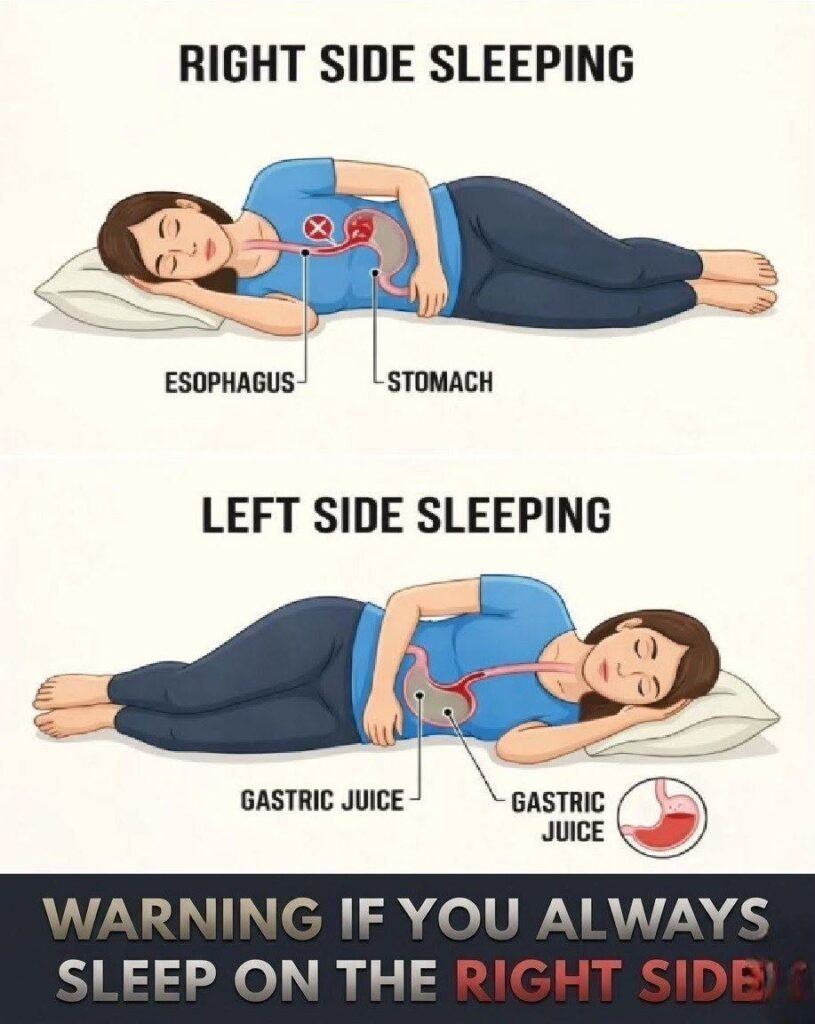
Do You Always Sleep on Your Right Side? Here’s What Sleep Experts Say
Your sleeping position can affect comfort, pressure on certain parts of the body, and how well you rest. If you naturally sleep on your right side, there is generally no reason to worry simply because you prefer that position.
However, sleeping position can matter depending on your individual comfort, health needs, and whether you experience symptoms such as back discomfort, shoulder pain, or nighttime heartburn.
🛏️ Is Sleeping on Your Right Side Bad?
For most healthy people, sleeping on the right side is a perfectly reasonable sleeping position.
Side sleeping can help keep the body supported when your pillow and mattress provide good alignment. Some people also find side sleeping more comfortable than sleeping on their back or stomach.
There isn’t one sleeping position that is universally best for everyone.
❤️ Right-Side Sleeping and Heart Health
You may have seen claims online suggesting that sleeping on the right side is dangerous for the heart. These claims are often exaggerated.
For most people, choosing the right side for sleeping does not mean that you are harming your heart.
If you have a heart condition or have been specifically advised by a healthcare professional to use a particular sleeping position, follow that individualized advice.
🔥 What About Heartburn?
Sleeping position can make a difference for people who experience acid reflux or heartburn.
Some research and clinical guidance suggest that left-side sleeping may reduce nighttime reflux symptoms for some people. The reason is related to the position of the stomach and the movement of stomach contents.
If you regularly experience nighttime heartburn, changing your sleeping position may be worth trying.
🫁 Does Side Sleeping Affect Breathing?
Side sleeping can be helpful for some people with snoring or certain types of sleep-disordered breathing, because sleeping on the side may help keep the upper airway more open than sleeping flat on the back.
However, persistent loud snoring, breathing pauses during sleep, gasping, or significant daytime sleepiness should be discussed with a healthcare professional.
🦴 Your Spine and Sleeping Position
Your sleeping position can influence how your spine and joints feel in the morning.
If you sleep on your side, try to keep your head and neck in a neutral position rather than allowing your head to tilt sharply upward or downward.
A pillow between the knees can also provide additional comfort and help maintain a more natural alignment of the hips and legs.
😴 How to Make Side Sleeping More Comfortable
Try these simple adjustments:
1. Choose the Right Pillow
Your pillow should comfortably support your head and neck without forcing your neck into an awkward angle.
2. Try a Pillow Between Your Knees
Placing a pillow between your knees may help reduce pressure and improve comfort while sleeping on your side.
3. Avoid Sleeping With Your Shoulder Compressed
If your shoulder becomes uncomfortable, slightly adjust your position or try changing sides.
4. Pay Attention to Your Mattress
A mattress that provides appropriate support can make a noticeable difference in how comfortable side sleeping feels.
⚠️ When Should You Talk to a Doctor?
Your preferred sleeping position isn’t usually a medical problem by itself.
However, talk with a healthcare professional if you regularly experience:
These symptoms can have many possible causes and shouldn’t automatically be blamed on sleeping position.
💤 The Bottom Line
If you naturally sleep on your right side and wake up feeling comfortable and rested, there is generally no need to change simply because of your sleeping position.
If you experience reflux, pain, snoring, or other nighttime symptoms, experimenting with your position and pillow support may help. Your comfort—and any specific advice from your healthcare professional—should guide your choice.
To provide the best experiences, we use technologies like cookies to store and/or access device information. Consenting to these technologies will allow us to process data such as browsing behavior or unique IDs on this site. Not consenting or withdrawing consent, may adversely affect certain features and functions.
Functional
Always active
The technical storage or access is strictly necessary for the legitimate purpose of enabling the use of a specific service explicitly requested by the subscriber or user, or for the sole purpose of carrying out the transmission of a communication over an electronic communications network.
Preferences
The technical storage or access is necessary for the legitimate purpose of storing preferences that are not requested by the subscriber or user.
Statistics
The technical storage or access that is used exclusively for statistical purposes.The technical storage or access that is used exclusively for anonymous statistical purposes. Without a subpoena, voluntary compliance on the part of your Internet Service Provider, or additional records from a third party, information stored or retrieved for this purpose alone cannot usually be used to identify you.
Marketing
The technical storage or access is required to create user profiles to send advertising, or to track the user on a website or across several websites for similar marketing purposes.